Cover Letter for Teachers 5 Essential Tips
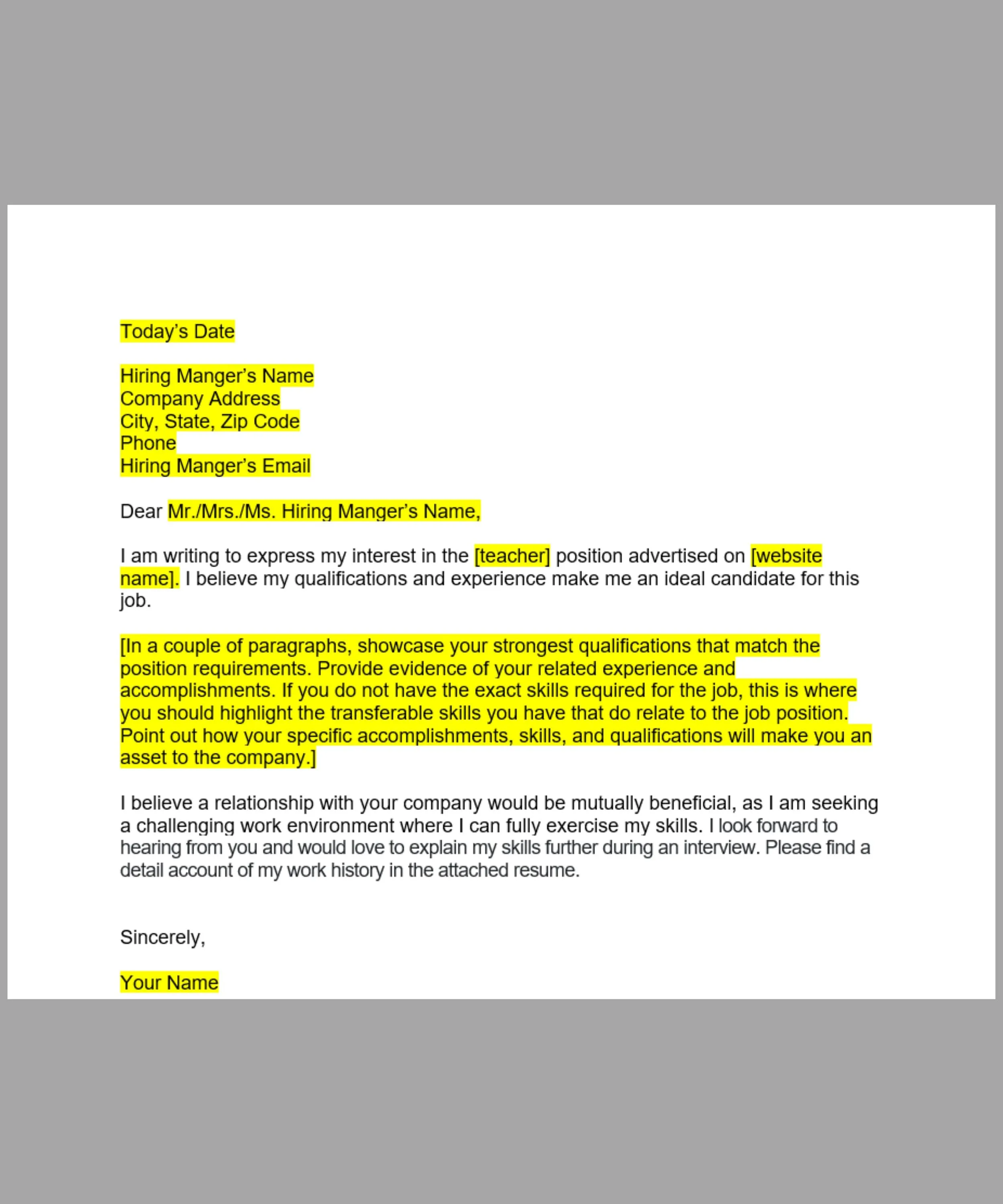
A well-crafted cover letter is your first opportunity to make a strong impression on a potential employer. For primary teachers, the cover letter serves as a crucial introduction, allowing you to showcase your skills, experience, and passion for education. It’s not merely a formality, but a vital tool in securing an interview. This guide provides five essential tips to help primary teachers craft cover letters that stand out and increase their chances of landing their dream job. Remember, the goal is to create a compelling narrative that highlights your unique qualities and aligns with the specific requirements of the role you’re applying for. By following these tips, you can transform your cover letter from a simple document into a powerful marketing tool that opens doors to new opportunities. Make sure that your letter should be tailored to each position. Generic cover letters often get overlooked; a personalized approach demonstrates genuine interest and attention to detail. Furthermore, it is critical to proofread your letter.
Highlighting Your Qualifications
Your qualifications are the foundation of your cover letter. Begin by clearly stating your relevant qualifications, such as your teaching degree, any certifications, and specialized training related to primary education. Mention any specific areas of expertise, such as early literacy, special education, or curriculum development. When detailing your qualifications, don’t just list them; explain how they make you a strong candidate. For example, if you have a certification in early childhood education, explain how this enables you to create engaging and age-appropriate lessons. Quantify your achievements whenever possible. Instead of saying “I improved student test scores,” say “I improved student test scores by 15% within one academic year using differentiated instruction techniques.” This provides concrete evidence of your abilities and demonstrates your impact on student learning. Keep it concise and avoid jargon that the hiring manager may not understand. Use bullet points or short paragraphs to make the information easy to read and digest. Emphasize the most important qualifications relevant to the specific job description.
Showcasing Relevant Experience
Your experience is what brings your qualifications to life. Describe your teaching experience in detail, including the schools you’ve worked at, the grades you’ve taught, and the specific responsibilities you had. Focus on experiences that align with the job description. If the position emphasizes classroom management, highlight your successful strategies for creating a positive and productive learning environment. If the school is looking for someone to implement a new curriculum, mention any experience you have with similar initiatives. Again, use the STAR method (Situation, Task, Action, Result) to structure your descriptions. Briefly describe the situation, the task you were given, the actions you took, and the results you achieved. For example, “In my previous role, I noticed that students were struggling with reading comprehension (Situation). My task was to implement strategies to improve their skills (Task). I introduced daily guided reading sessions, utilized interactive reading games, and provided individualized support (Action). As a result, the average reading comprehension scores increased by 20% (Result).” This approach provides a clear and compelling narrative of your impact as a teacher. When mentioning your experience, highlight any leadership roles, such as mentoring other teachers or leading curriculum development projects. These experiences demonstrate your initiative and commitment to the profession.
Demonstrating Your Teaching Philosophy
Your teaching philosophy reflects your core beliefs about education and your approach to teaching. Clearly articulate your philosophy in your cover letter. Briefly explain what you believe is essential for student success and the values that guide your teaching practices. This section is where you can showcase your passion for teaching and your commitment to creating a positive learning environment. Highlight your belief in student-centered learning, differentiated instruction, or any other pedagogical approaches you favor. Provide specific examples of how you put your philosophy into practice. For instance, if you believe in fostering a collaborative classroom environment, describe how you incorporate group projects, peer tutoring, or other collaborative activities. If you value creating a safe and inclusive classroom, mention how you establish clear expectations, address bullying, and celebrate diversity. Make sure your philosophy aligns with the values of the school you are applying to. Research the school’s mission, values, and any specific initiatives it has. Tailor your teaching philosophy to reflect your understanding of the school’s culture and priorities. This demonstrates that you are a good fit and are committed to the same goals. The key is to express your teaching philosophy concisely, using language that reflects your genuine passion and dedication.
Including a Compelling Opening and Closing
The opening and closing paragraphs of your cover letter are crucial for grabbing the reader’s attention and leaving a lasting impression. Begin with a strong opening that immediately captures the reader’s interest. Avoid generic phrases. Instead, start with a brief anecdote, a compelling statement about your passion for teaching, or a specific reason you are interested in the position. For example, you could start with “Inspired by the school’s commitment to fostering a love of learning, I am eager to apply for the Primary Teacher position.” In the closing paragraph, reiterate your interest in the position and express your enthusiasm for an interview. Summarize your key qualifications and why you are a good fit for the role. End with a call to action, such as “I am eager to discuss my qualifications further and welcome the opportunity to interview for this position.” Always thank the reader for their time and consideration. Ensure that your closing paragraph reflects the tone of your letter and leaves the reader with a positive impression. Make sure it’s easy to read and it does not contain any mistakes.
Proofreading and Formatting

Proofreading and formatting are essential steps to ensure your cover letter is polished and professional. Carefully proofread your cover letter for any grammatical errors, spelling mistakes, or typos. These errors can detract from your credibility and make you appear careless. Use a grammar and spell checker, but also read your letter aloud to catch any errors that automated tools may miss. Formatting your cover letter appropriately is also crucial. Use a professional font, such as Times New Roman, Arial, or Calibri, and maintain a consistent font size (typically 11 or 12 points). Use clear and concise language, with short paragraphs and bullet points to improve readability. Pay attention to the layout. Ensure that your cover letter is well-organized, with clear headings and subheadings. Use white space effectively to avoid a cluttered appearance. Consider asking a friend or colleague to proofread your letter as a second pair of eyes can often catch errors you might have missed. A well-formatted and error-free cover letter demonstrates your attention to detail and professionalism, increasing your chances of being selected for an interview. Remember that your cover letter is a representation of your brand.