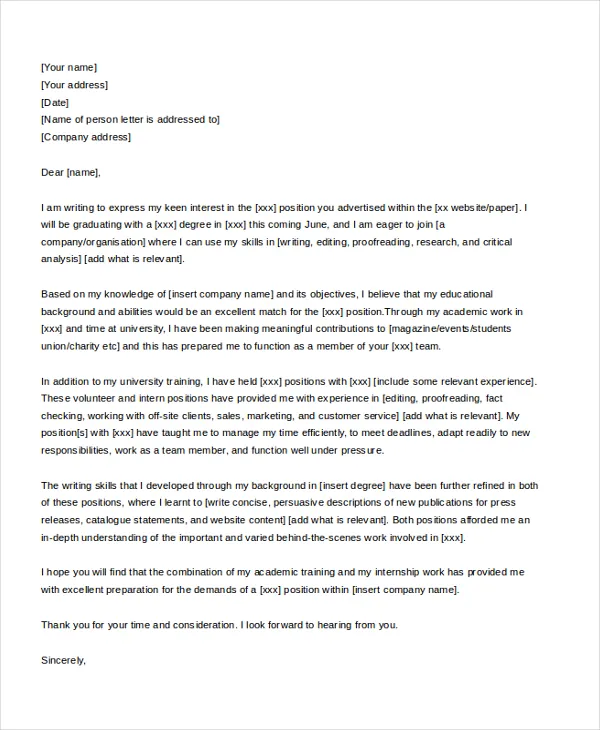
Crafting Your Out-of-State Cover Letter Why It Matters
Applying for a job out of state presents unique challenges, and your cover letter is your first chance to address them. Unlike local candidates, you need to convince the employer not only of your qualifications but also of your commitment to relocating. This is where a well-crafted cover letter becomes crucial. It’s not just about listing your skills; it’s about painting a picture of your dedication and preparedness for the move. A strong cover letter demonstrates that you’ve thought through the practicalities of relocation and are genuinely excited about the opportunity. Without a compelling cover letter, your application might be overlooked, as employers may assume you haven’t fully considered the implications of accepting a role far from home. Therefore, prioritizing a tailored cover letter can significantly increase your chances of landing an interview for an out-of-state position.
Highlighting Your Interest in Relocation
The very first step is to explicitly state your interest in relocating to the area. Don’t be vague; make it clear that you are prepared and willing to move. You might start with a sentence such as, “I am writing to express my enthusiastic interest in the [Job Title] position and my readiness to relocate to [City, State].” This immediate declaration sets the tone and removes any doubt the employer might have. Moreover, use positive and enthusiastic language. Expressing excitement about the new opportunity signals your genuine interest and commitment. For example, mentioning what specifically attracts you to the new location (e.g., the company culture, the industry’s growth, or the lifestyle) can further strengthen your statement. Showing this level of specific engagement helps distinguish your application from others and reassures the employer of your dedication.
Demonstrating Your Research on the Area

Show the employer you’ve done your homework by mentioning specific reasons why you’re interested in their location. This could include citing the city’s reputation in your field, the presence of specific companies or institutions you admire, or even lifestyle factors that appeal to you. For instance, “I am particularly drawn to [City]’s growing tech sector and the innovative work being done at [Company Name].” This shows genuine interest and knowledge beyond a generic application. Additionally, consider incorporating details about the local culture or community. If you’ve researched local events, neighborhoods, or cultural attractions, mentioning them can further personalize your application. This level of detail demonstrates you’ve considered not just the job but also the life you’d build in the new location. Showing that you’re not just looking for a job, but a life, can give you a significant advantage.
Showcasing Your Adaptability Skills
Relocating requires adaptability, so highlighting your ability to adjust to new environments is critical. Provide examples of your previous experiences where you’ve successfully navigated change. This could include experiences living or working in different regions, adapting to new teams, or learning new skills quickly. For instance, “In my previous role, I quickly integrated into a new team by [specific action], demonstrating my ability to adapt to changing team dynamics and new challenges.” This showcases your ability to thrive in unfamiliar settings. Moreover, emphasize any cross-cultural skills or experiences you possess. If you’ve lived abroad, worked with diverse teams, or learned a new language, mention these as they highlight your adaptability and willingness to embrace new experiences. The ability to adapt is a valuable asset, and by illustrating your past successes, you reassure the employer that you can handle the challenges of moving to a new place.
Addressing the Relocation Costs
Relocation can be a significant financial consideration for employers. While you don’t need to go into extreme detail, it’s beneficial to address how you plan to manage the costs. One approach is to express your willingness to discuss relocation assistance or to cover some of the expenses yourself. For example, you might write, “I am prepared to discuss potential relocation assistance and am open to covering a portion of the expenses.” This demonstrates responsibility and a proactive approach. Also, research the company’s policy on relocation. If they offer assistance, make sure to mention your understanding of their support. If they don’t offer assistance, your willingness to handle the costs becomes even more important. Being transparent about your financial readiness helps alleviate any concerns the employer might have and positions you as a practical and prepared candidate.
Mentioning Your Ties to the New Location

If you have any existing connections to the area, be sure to mention them. This could include family, friends, or even past experiences in the location. For example, “I have family living in [City] and have always admired the community.” These connections can give employers confidence in your commitment to the area. If you don’t have direct ties, consider mentioning any research you’ve done that makes the location appealing. If you have friends or acquaintances in the area, consider reaching out to them for advice. This not only provides valuable insights but also indicates your proactive approach to relocation. When it comes to out-of-state applications, anything that strengthens your case for relocation is extremely important. Mentioning these ties can set your application apart and demonstrate your genuine interest in the opportunity.
Tailoring Your Letter to the Specific Job
Generic cover letters rarely impress. Customizing your cover letter to each specific job is crucial, especially when applying for out-of-state positions. Start by carefully reviewing the job description and identifying the key skills and qualifications the employer seeks. Then, tailor your letter to highlight your relevant experience and how it aligns with the job’s requirements. Provide specific examples of your accomplishments that demonstrate your ability to excel in the role. Quantify your achievements whenever possible. For instance, instead of saying, “Managed projects,” you could write, “Managed projects, resulting in a 15% increase in efficiency.” Be sure to research the company culture and values. This allows you to demonstrate how your skills and experiences align with the company’s needs and culture. Showing genuine interest in their company culture and its specific needs can make all the difference.
Emphasizing Your Relevant Skills and Experience
While addressing relocation is important, don’t lose sight of the core purpose of a cover letter: showcasing your qualifications. Use the letter to highlight your key skills, experiences, and accomplishments that are most relevant to the job. Tailor your descriptions to match the job description and showcase your ability to thrive in the role. Provide concrete examples of your past achievements. Quantify your accomplishments whenever possible. Use action verbs to describe your responsibilities and showcase your proactive approach. Also, address any potential gaps in your experience or skills. If you identify any areas that need improvement, acknowledge them and explain how you plan to overcome these challenges. Focus on your strengths and demonstrate why you are the best fit for the role. Ultimately, the cover letter should convince the employer that you possess the skills and experience to perform and excel in the job.
Including a Strong Call to Action

End your cover letter with a clear call to action. Make it easy for the employer to move forward. State your interest in an interview and provide your availability for a call or meeting. For example, write, “I am eager to discuss how my skills and experience can contribute to [Company Name]. I am available for an interview at your earliest convenience.” Ensure your contact information is easily accessible, including your phone number and email address. It’s important to express your gratitude for their time and consideration. Thank the hiring manager for reviewing your application. This simple act of appreciation shows professionalism and courtesy. Moreover, proofread your cover letter carefully before submitting it. Ensure there are no typos or grammatical errors that could detract from your application. A well-written and error-free cover letter enhances your credibility and increases your chances of getting the interview.