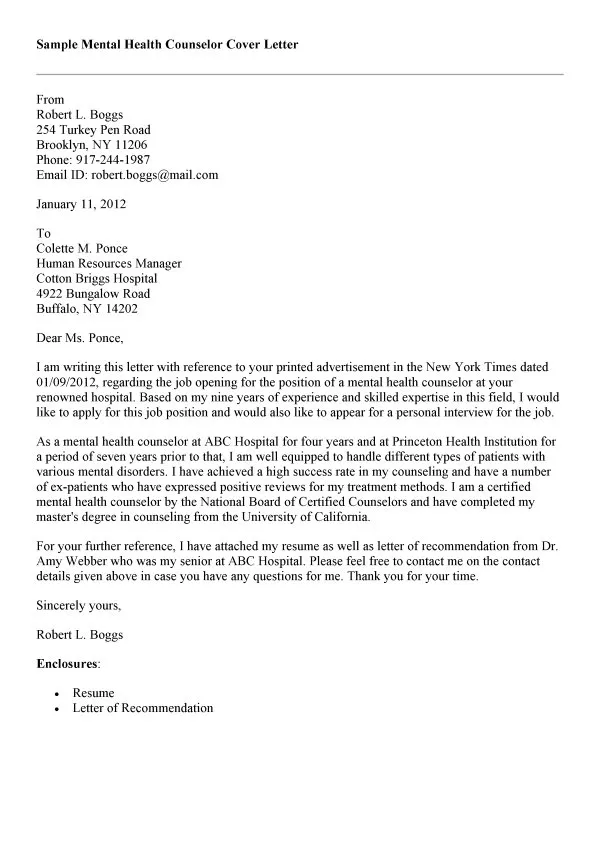
Why a Mental Health Therapist Cover Letter Matters
In the competitive field of mental health, a well-crafted cover letter is your initial handshake with potential employers. It’s your first opportunity to make a strong impression and distinguish yourself from other qualified candidates. A cover letter is more than just a formality; it’s a critical tool that allows you to expand on your resume, highlight relevant experiences, and demonstrate your genuine interest in the specific position and organization. A compelling cover letter should showcase your passion for helping individuals, families, or groups struggling with mental health issues and outline your suitability for the role. This document allows you to explain the ‘why’ behind your career choices and your aspirations within the field. It provides an opportunity to personalize your application, connecting your skills and experiences directly to the requirements and values of the employer. Failure to write a strong cover letter could mean missing opportunities.
Crafting a thoughtful cover letter is essential to opening doors to new job opportunities.
Showcasing Your Qualifications
When showcasing your qualifications, it’s vital to go beyond a mere listing of credentials. A successful cover letter needs to articulate how your education, certifications, and licenses align with the job requirements. Detail your specific degrees, such as a Master’s or Doctoral degree in Counseling, Psychology, or a related field, and mention any specialized training you’ve received. Always include your license number and the state in which you’re licensed, ensuring potential employers know you meet the legal requirements for practicing therapy. Furthermore, it is important to emphasize any specializations you may have, such as experience in cognitive behavioral therapy (CBT), dialectical behavior therapy (DBT), or other therapeutic approaches. Highlight any additional certifications you hold, such as those related to addiction treatment, trauma-informed care, or specific populations (children, adolescents, or families).
Highlight all the abilities and knowledge you have acquired, and align them with the requirements that the employer is looking for.
Highlighting Relevant Experience

Detailing your professional experience is crucial. Rather than simply listing job titles and dates, focus on the responsibilities and achievements that are most pertinent to the position you’re applying for. For each role, describe your key duties and the populations you’ve served. Quantify your accomplishments whenever possible; for example, mention the number of clients you’ve worked with, the improvement in client outcomes, or any programs you’ve developed or implemented. If you’ve worked in diverse settings – such as hospitals, private practices, community clinics, or schools – briefly describe each setting to provide context. Moreover, mention any special projects, research, or presentations you’ve contributed to, especially if they’re relevant to the role. Provide specific examples of how you have successfully addressed challenges, improved client outcomes, or contributed to team success.
Focus on achievements and responsibilities with quantifiable results.
Tailoring Your Cover Letter
Generic cover letters are easily identified and often discarded. To stand out, personalize each cover letter to match the specific job and the organization. Research the organization and understand its mission, values, and the specific requirements of the position. Demonstrate your knowledge by referencing the organization’s work, its client base, or its unique approach to mental health care. Address the specific requirements outlined in the job description, and explain how your skills and experience directly align with them. Explain why you are interested in the specific role and what you hope to contribute to the organization. This may include mentioning your enthusiasm for working with a specific population, your interest in a particular therapeutic approach the organization uses, or your desire to contribute to the organization’s mission. Showing that you understand the organization’s mission and are enthusiastic about their work will significantly increase your chances of success.
Address the specific requirements and expectations of the job position.
Formatting Your Cover Letter
The format of your cover letter should be professional and easy to read. Use a standard business letter format. Start with your contact information, followed by the date, and the employer’s contact information. Always use a professional font such as Times New Roman, Arial, or Calibri, and use a font size between 10 and 12 points. Maintain consistent formatting throughout the document, including spacing, margins, and alignment. Keep your paragraphs concise and well-structured, with clear topic sentences. Use bullet points or numbered lists to highlight key skills or experiences when necessary. Ensure your cover letter is free of grammatical errors and typos. Proofread the letter multiple times, and consider asking a colleague or friend to review it as well.
Maintain a professional and readable format that is clear.
Essential Cover Letter Elements

The most important elements of your cover letter must be present. Start with a compelling opening that grabs the reader’s attention and states your purpose for writing. Mention the specific position you’re applying for and where you saw the job posting. Clearly state your interest in the organization and the role. In the body of your letter, highlight your qualifications, experiences, and skills that are most relevant to the job. Provide specific examples that demonstrate your ability to succeed in the role. Emphasize how your skills and experiences align with the requirements outlined in the job description. Explain why you’re interested in the role and what you hope to contribute to the organization. Conclude with a strong closing statement, reiterating your interest and expressing your enthusiasm for the opportunity. Include a call to action, such as expressing your availability for an interview and thanking the hiring manager for their time and consideration.
Make sure to include all the necessary information to make an impression.
Tips for Writing an Impressive Cover Letter
There are some key actions that can make a cover letter more impressive. Highlight your most relevant skills and experiences early in the letter to immediately capture the reader’s attention. Use keywords from the job description to demonstrate that you meet the requirements of the position. Tailor your letter to the specific job and organization. Showcase your personality and passion for mental health care. Provide specific examples of your accomplishments and contributions in previous roles. Proofread carefully, and have someone else review your letter before submitting it. Avoid generic phrases and clichés. Be concise and to the point, while still providing sufficient detail. Consider including a brief statement about your professional goals and how the position aligns with them. Finally, always be positive and enthusiastic.
Implement a few of these strategies to increase your chances of getting hired.
Addressing the Hiring Manager
When addressing the hiring manager, it is best to find out their name and use it. If you can find the hiring manager’s name, addressing them by name is the most professional approach. This demonstrates that you’ve taken the time to research the organization and make a personal connection. Use a professional salutation, such as ‘Dear Mr. Smith’ or ‘Dear Ms. Jones.’ If you cannot find the hiring manager’s name, use a general salutation like ‘Dear Hiring Manager’ or ‘Dear [Department Name] Hiring Committee.’ Avoid overly casual salutations like ‘Hi’ or ‘Hello.’ In your closing, use a professional closing such as ‘Sincerely,’ ‘Best regards,’ or ‘Thank you.’ Make sure you spell the name correctly and double-check the spelling. If you are not sure, it may be appropriate to call and find out.
Personalize the letter to show you are a serious candidate.
Proofreading and Editing Your Cover Letter

Proofreading and editing are important steps to ensure your cover letter is free of errors and makes a positive impression. Before submitting, review your cover letter carefully for any typos, grammatical errors, or formatting inconsistencies. Read the letter aloud to check for awkward phrasing or unclear sentences. Ask a friend, colleague, or career counselor to review your cover letter for feedback. They may catch errors that you missed and provide valuable insights. Ensure the letter flows logically and is easy to understand. Make sure your contact information is accurate and up to date. After making any revisions, proofread again to ensure no new errors were introduced. A well-proofread cover letter demonstrates your attention to detail and professionalism.
Never submit a cover letter without a thorough review.