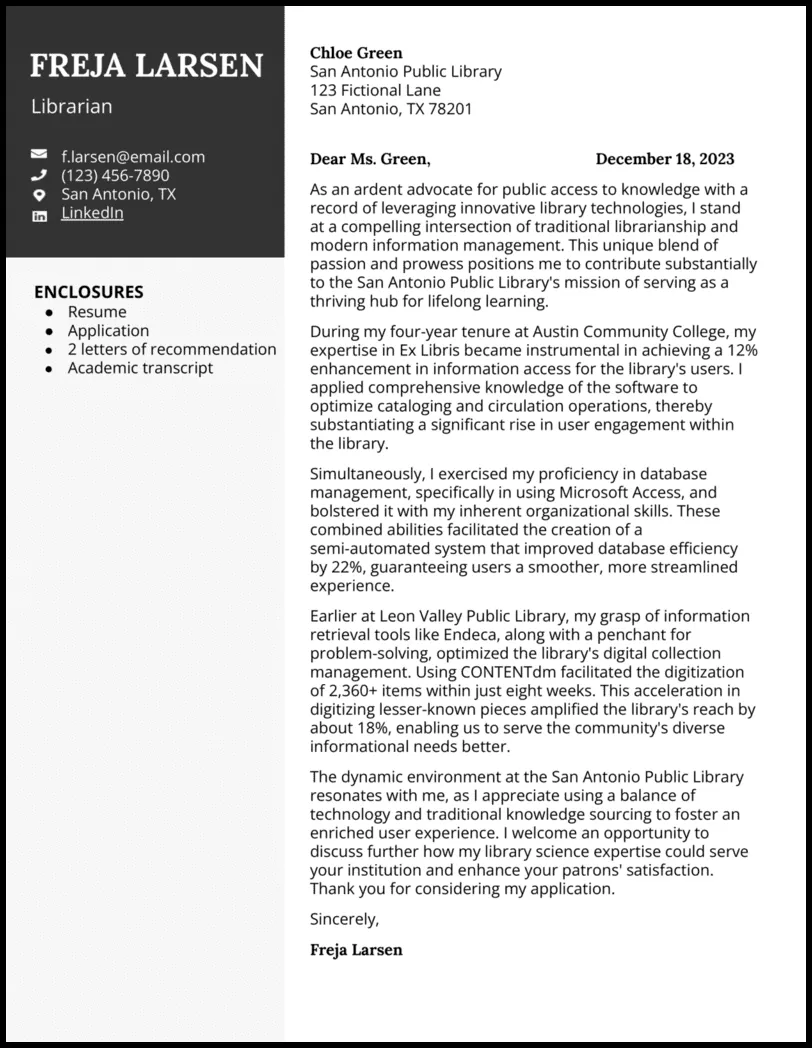
Highlight Your Skills and Experience
Crafting a compelling cover letter is crucial when applying for a school librarian position. It’s your first opportunity to make a strong impression and demonstrate why you’re the ideal candidate. This section will focus on how to effectively showcase your skills and experience, making you stand out from the competition. Start by clearly stating the position you are applying for and where you saw the job posting. Immediately after, provide a brief overview of your key qualifications. This introductory paragraph should grab the reader’s attention and make them want to learn more about your background. Highlight your most relevant skills and accomplishments. What makes you a good fit for this role? Consider mentioning any specific technologies you are familiar with, such as library management software, online databases, or digital literacy programs. Quantify your achievements whenever possible. For example, instead of saying you improved library usage, state that you increased student visits by a certain percentage or implemented a successful reading program that resulted in increased literacy scores. The more you quantify your successes, the more impactful your cover letter will be.
Education and Certifications
Your educational background is a critical element of your cover letter. Most school librarian positions require at least a Master’s degree in Library Science or a related field. Clearly state your degree, the name of the institution, and the year of graduation. If you have any specialized certifications, such as a teaching certificate or a specific technology certification, be sure to include them. If you are a recent graduate or have limited professional experience, emphasize any relevant coursework, projects, or volunteer work that demonstrates your understanding of library science principles and your ability to work with students. Also, it is important to consider any relevant continuing education courses or workshops you have completed, as these can showcase your commitment to staying up-to-date with current trends and best practices in the field. It’s important to tailor this section to the specific requirements of the job description. If the job posting emphasizes a particular skill or certification, make sure you highlight it in your cover letter.
Relevant Experience

Detail your professional experience in this section. Describe your previous roles in chronological order, starting with your most recent position. For each position, provide the job title, the name of the organization, and the dates of employment. Briefly describe your responsibilities and accomplishments in each role, highlighting the aspects that are most relevant to the school librarian position you are applying for. Emphasize any experience working with children or young adults. If you have experience developing and implementing library programs, managing budgets, or selecting library materials, be sure to include those details. Also, consider mentioning any experience you have with technology integration in a library setting. This could include experience with online databases, e-books, or other digital resources. The more you can demonstrate your ability to contribute to a school’s learning environment, the stronger your cover letter will be. Whenever possible, use action verbs to describe your accomplishments, such as “managed,” “developed,” “implemented,” and “collaborated.”
Tailor to the School and Position
A generic cover letter is unlikely to impress a hiring manager. To stand out, you must tailor your cover letter to the specific school and the position you are applying for. This section will guide you on how to personalize your letter to increase your chances of success. Start by carefully reviewing the job description. Identify the key skills, qualifications, and responsibilities that the school is seeking. Then, highlight your skills and experiences that align with these requirements. Customize your letter to showcase how your qualifications and career goals match the school’s needs and mission. Use the school’s name in your cover letter and, if possible, reference specific programs or initiatives that the school is known for. This shows the hiring manager that you have taken the time to research the school and are genuinely interested in the position. Also, consider what makes you unique and why you would be a good fit for this particular school. You should aim to clearly communicate your understanding of the school’s needs and how you can contribute to the school’s success.
Research the School’s Mission
Before writing your cover letter, research the school’s mission statement, values, and any special programs or initiatives. This information will help you tailor your letter to the school’s specific needs and demonstrate your genuine interest in the position. Most schools have a website that includes their mission statement, which usually outlines their goals, values, and educational philosophy. Read this carefully, as it will give you insight into what the school values and what they are looking for in a candidate. Also, examine the school’s website for information about its library, its resources, and any special programs it offers. If the school emphasizes a particular subject area, such as STEM or the arts, consider highlighting any relevant experience or skills you have in those areas. If the school has a diverse student population, mention your experience working with diverse communities or your ability to create inclusive library programs. The more you can show that you align with the school’s mission and values, the more likely you are to impress the hiring manager.
Address Specific Requirements

Carefully review the job description and address each of the listed requirements in your cover letter. If the job description specifies certain skills or qualifications, make sure you highlight them in your letter and provide specific examples of how you have demonstrated these skills in the past. For instance, if the job description requires experience with a particular library management system, state your experience and describe your successes. Be sure to use the same keywords and phrases as those used in the job description. This will help your cover letter get past any automated screening systems and ensure that the hiring manager immediately recognizes your qualifications. If the job description mentions a particular responsibility, such as collaborating with teachers or promoting literacy programs, provide examples of your experience in these areas. For instance, mention your experience in developing and implementing successful reading programs that increased student engagement or in collaborating with teachers to integrate library resources into their lessons. By directly addressing the specific requirements of the job, you show the hiring manager that you have the qualifications and experience needed to be successful in the role.
Showcase Your Passion for Libraries
Expressing your passion for libraries is a critical element of a successful cover letter. This section will focus on how to convey your enthusiasm for the profession and your commitment to serving students. School librarian positions are about much more than just managing books; they are about fostering a love of reading, promoting information literacy, and creating a welcoming environment for students. When writing your cover letter, clearly state your passion for libraries and the impact you want to make on students’ lives. Share personal anecdotes that reflect your love of libraries. These anecdotes could be about how libraries have shaped your own life or inspired your career choice. They could also be about memorable experiences you have had working with students in a library setting. Also, it is important to talk about what you enjoy about your work. Do you love helping students find the perfect book? Are you passionate about promoting literacy and digital literacy? Expressing this will make your cover letter engaging and memorable.
Enthusiasm for Literacy and Education
School librarians play a crucial role in promoting literacy and education. Demonstrate your enthusiasm for these core values. Highlight your commitment to creating a stimulating learning environment and promoting a love of reading among students. Share your experience in developing and implementing literacy programs, such as book clubs, reading challenges, or author visits. Explain how you have used these programs to engage students and improve their reading skills. Also, mention any experience you have in integrating technology into your teaching and learning activities. This could include experience with online databases, e-books, or other digital resources. Talk about your dedication to education. Talk about your philosophy on the role of the library in education. This helps the hiring manager understand your vision for the role. Moreover, you should consider mentioning any professional development activities you have participated in, such as workshops or conferences, that demonstrate your commitment to staying up-to-date with the latest trends and best practices in the field of literacy and education.
Commitment to Student Success

A school librarian’s primary focus is on the success of the students. Therefore, make sure to clearly convey your commitment to student achievement and well-being. Highlight your experience working with students and supporting their academic and personal growth. Provide specific examples of how you have helped students in the past, such as helping them find resources for research projects, assisting them with technology skills, or providing a safe and welcoming space for them to learn and grow. Mention your experience with diverse student populations. If you have experience working with students from diverse backgrounds or with special needs, be sure to highlight it in your cover letter. Show your commitment to equity, diversity, and inclusion. Also, mention your interest in creating a welcoming and inclusive library environment where all students feel safe, respected, and supported. This could involve creating diverse collections, offering programs that celebrate different cultures, or partnering with community organizations to provide resources for students and their families.
Formatting and Structure
A well-formatted and structured cover letter is essential for making a professional impression. This section will provide you with tips on how to format your cover letter to ensure it is clear, concise, and easy to read. Use a standard business letter format. This typically includes your contact information at the top, the date, the hiring manager’s name and title, the body of the letter, and a professional closing. Use a readable font, such as Times New Roman, Arial, or Calibri. Choose a font size between 10 and 12 points. Ensure that the letter is well-organized, with clear paragraphs and headings. Use headings and subheadings to break up the text and make it easier for the reader to scan. Proofread your cover letter carefully for any typos or grammatical errors. These errors can detract from your professionalism. Also, consider the overall visual appeal of your cover letter. Use adequate margins and spacing to avoid a cluttered look. Your goal is to create a cover letter that is both informative and visually pleasing.
Professional Tone and Language
The tone and language you use in your cover letter are critical for making a professional impression. Choose a formal and respectful tone. Avoid slang, colloquialisms, or overly casual language. Be polite and professional in all your interactions with the hiring manager. Avoid using jargon or technical terms that the hiring manager might not understand. Instead, use clear and concise language that is easy to understand. Also, use positive and enthusiastic language. Emphasize your skills and accomplishments, and express your genuine interest in the position. Be confident in your abilities, but avoid being arrogant. Showcase your achievements in a humble and professional manner. The more you are professional the more you increase your chances of getting hired.
Proofreading and Editing

Proofreading and editing are crucial steps in the cover letter writing process. Errors in your cover letter can undermine your professionalism and reduce your chances of getting hired. Proofread your cover letter carefully for any typos, grammatical errors, or spelling mistakes. Read your letter aloud to catch any awkward phrasing or unclear sentences. Then, use a grammar checker to help identify any errors you might have missed. Consider asking a friend, family member, or career counselor to review your cover letter. Another pair of eyes can often catch errors that you might have missed. Make sure that your cover letter is tailored to the specific job you are applying for. Highlight your most relevant skills and experiences, and address each of the requirements listed in the job description. The more polished your cover letter is, the better your chances of making a positive impression on the hiring manager.