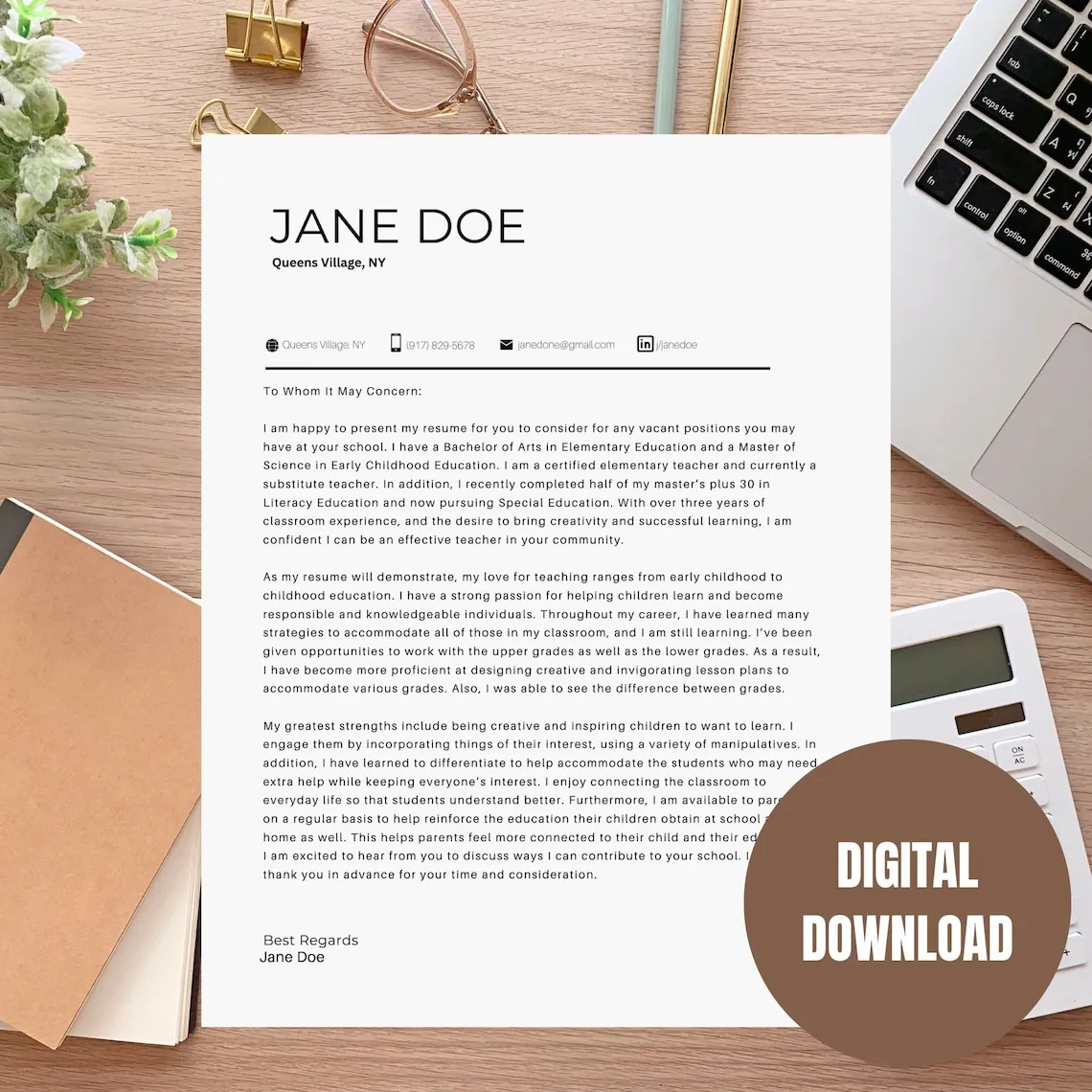
Why a Cover Letter Is Essential
In the competitive world of job applications, a cover letter is your first introduction to a potential employer, often read even before your resume. It is an opportunity to go beyond the basic facts and figures presented in your resume, offering a chance to showcase your personality, enthusiasm, and how your skills and experience align with the specific job requirements. A well-crafted cover letter can significantly increase your chances of getting noticed and securing an interview, demonstrating your genuine interest in the role and the company. It allows you to tell a story about yourself, highlighting your most relevant achievements and explaining why you are the ideal candidate for the position. Without one, you might be missing the chance to provide context to your application, possibly leading to your application being overlooked or passed over. It can also help you show you are professional and know how to communicate effectively.
Highlight Your Key Skills and Experience
Your cover letter is your opportunity to spotlight the skills and experiences that make you a strong contender for the job. Instead of simply listing your qualifications, use this space to articulate how your past experiences have prepared you to excel in this new role. Carefully analyze the job description and pinpoint the key skills and requirements that the employer is seeking. Then, provide specific examples from your professional history where you have demonstrated these skills. Quantify your achievements whenever possible; for instance, instead of saying ‘Managed projects,’ state ‘Managed projects, resulting in a 15% increase in efficiency.’ This demonstrates your accomplishments and showcases your competence and ability to produce results. Use action verbs to describe your roles and achievements to make the experience stand out.
Research the Company

Before you start writing your cover letter, it’s crucial to research the company thoroughly. This shows the hiring manager that you are genuinely interested in the role and understand the company’s mission, values, and culture. Visit the company’s website, read recent press releases, and check out their social media profiles. Understand what the company does, its products or services, its target market, and any recent achievements or news. When writing your cover letter, use this information to show how your skills and experiences align with the company’s specific needs and goals. For instance, you could mention how your past experience aligns with the company’s recent initiatives, or how your values resonate with the company culture. This level of detail will not only impress the hiring manager but also help you tailor your letter to demonstrate a mutual fit.
Tailor Your Cover Letter
One of the biggest mistakes people make when applying for jobs is using a generic cover letter for all applications. A generic cover letter is easily spotted and often discarded. To stand out, tailor each cover letter to the specific job and company. Address the letter to the hiring manager by name if possible; if not, use a professional greeting. Customize the content to match the job description, highlighting the skills and experiences that are most relevant to the role. Avoid the one-size-fits-all approach; instead, showcase how your qualifications align with the company’s specific needs. Also, mention your understanding of the company’s goals and how you can contribute to their success. This shows that you’ve taken the time to understand the role and the organization, making your application more personal and compelling. Adapt your tone to fit the company’s culture, if you know it, but always maintain a professional voice.
Proofread and Edit Your Cover Letter
Before submitting your cover letter, it’s essential to proofread and edit it meticulously. A cover letter riddled with errors will reflect poorly on your attention to detail and professionalism. Check for grammatical errors, spelling mistakes, and typos. Ensure your sentences are clear, concise, and easy to understand. Read the cover letter aloud to catch any awkward phrasing or inconsistencies. Also, make sure the layout is clean and well-organized. It can also be useful to have a friend or career advisor review your cover letter for feedback on its content, tone, and clarity. This fresh perspective can help you identify any areas that need improvement. Remember, your cover letter is a representation of you and your work; a polished, error-free letter will make a positive impression and increase your chances of securing an interview.
Call to Action

A compelling cover letter does more than just introduce you; it also encourages the reader to take the next step. At the end of your cover letter, include a clear and concise call to action. Indicate your interest in an interview and provide your contact information, including your phone number and email address. Express your enthusiasm for the position and the company, and reiterate how your skills and experience align with their needs. Make it easy for the hiring manager to take action by ensuring they know how to contact you. You can also mention your availability for an interview and thank them for their time and consideration. A strong call to action demonstrates your proactive approach and reinforces your interest in the role, making it more likely that you’ll be invited to the next stage of the hiring process.