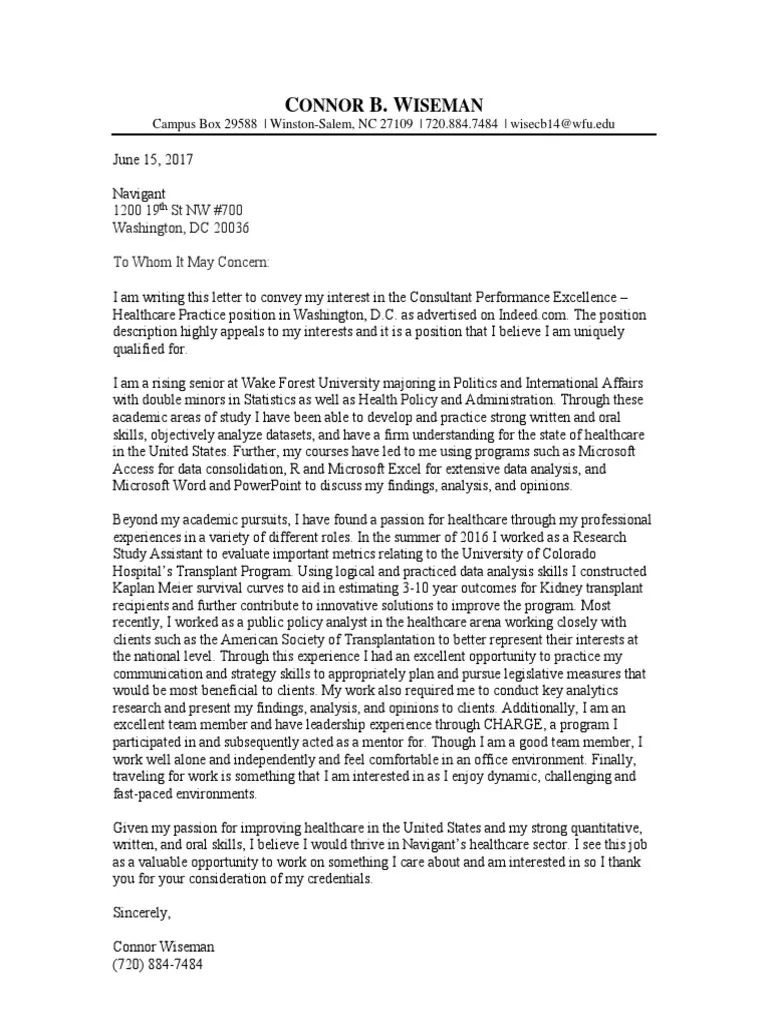
What is a Targeted Cover Letter?
A targeted cover letter is a customized document that accompanies your resume when you apply for a job. Unlike a generic cover letter, a targeted cover letter is specifically tailored to the requirements of a particular job and the needs of the hiring company. It’s a strategic tool designed to showcase how your skills, experience, and qualifications align with the specific role and demonstrate your understanding of the company’s mission, values, and goals. This approach significantly increases your chances of catching the employer’s attention and securing an interview. A well-crafted targeted cover letter goes beyond simply restating your resume; it provides a compelling narrative that highlights your unique value proposition and explains why you are the perfect fit for the position.
Why a Targeted Cover Letter is Crucial
In today’s competitive job market, a generic cover letter simply won’t cut it. Recruiters and hiring managers can easily spot a generic letter, which often ends up in the rejection pile. A targeted cover letter demonstrates that you’ve taken the time to understand the job requirements and the company’s needs. It shows your genuine interest in the role and the organization, setting you apart from other applicants who might be sending out mass applications. A targeted cover letter allows you to highlight the most relevant aspects of your experience and skills, making it easier for the hiring manager to see how you can contribute to the company’s success. This focused approach improves your chances of getting noticed and moving forward in the hiring process.
Key Elements of a Successful Targeted Cover Letter

A successful targeted cover letter is more than just a formality; it’s a carefully crafted marketing document that sells your skills and experience to a potential employer. To create a compelling cover letter, you must include several essential elements. First, personalize your letter by addressing it to the hiring manager by name, if possible. Then, open with a strong hook that grabs the reader’s attention and clearly states the position you’re applying for and where you found it. Highlight your most relevant skills and experience, using specific examples and quantifiable achievements to demonstrate your value. Show your understanding of the company’s needs and explain how you can address them. Finally, close with a call to action, expressing your enthusiasm for the opportunity and your willingness to interview.
Researching the Company and Role
Before you even start writing your cover letter, thorough research is essential. Start by visiting the company’s website to learn about its mission, values, and recent news. Explore the “About Us” section and look for information on their culture and goals. Next, carefully review the job description, paying close attention to the required skills, experience, and qualifications. Identify the key responsibilities and challenges of the role. Use LinkedIn to find out more about the company, and research the hiring manager’s profile to learn about their background and interests. This research will provide you with valuable insights that you can incorporate into your cover letter, demonstrating your genuine interest and understanding of the company and the specific role. This is where the magic happens, and it is a key factor in creating your targeted cover letter.
Highlighting Relevant Skills and Experience
Once you have a solid understanding of the company and the role, it’s time to highlight your relevant skills and experience. Identify the skills and experiences mentioned in the job description and match them to your own qualifications. Focus on the accomplishments that directly relate to the requirements of the position. Use action verbs to describe your achievements and provide specific examples that demonstrate your ability to excel in the role. For example, instead of saying “Managed projects,” you could say “Successfully managed cross-functional projects, resulting in a 15% reduction in project completion time.” Tailor your examples to fit the company’s industry and the specific challenges they face. The aim is to show the employer that you have done the necessary work to see if you are qualified.
Quantifying Achievements with Data

To make your cover letter even more compelling, quantify your achievements whenever possible. Instead of just stating that you “increased sales,” provide specific numbers and percentages. For instance, you could say, “Increased sales by 20% in Q4 2022 through targeted marketing campaigns.” Use data to showcase the impact of your work and demonstrate your value to the company. Consider using metrics like revenue generated, costs saved, projects completed on time, or customer satisfaction scores. Quantifying your achievements adds credibility to your claims and provides tangible evidence of your skills and abilities. This demonstrates to the hiring manager that you are not just claiming certain skills and experience; you have measurable results to back up your claims, further supporting why you are a great fit.
Adapting to Specific Job Requirements
Every job description is unique, so your cover letter should be tailored to reflect those specific requirements. Carefully analyze the job description and identify the key responsibilities and qualifications. Then, structure your cover letter to address these requirements directly. Highlight the skills and experiences that align with the job description and provide examples that showcase your ability to excel in the role. If the job description emphasizes certain software or tools, mention your proficiency in those specific technologies. If they mention working in a team, provide an example that demonstrates your teamwork and collaboration skills. The goal is to make it easy for the hiring manager to see that you are the perfect match for the position. This level of specificity shows that you paid attention to the details of the role and the needs of the company.
Cover Letter Examples That Get Interviews [Top 5]
Here are five examples of targeted cover letters, each designed for a different type of job. These examples are designed to demonstrate key principles, such as including personalization, highlighting relevant skills and experience, and incorporating data to demonstrate achievements. Note that the best cover letter is the one that fits your situation and best illustrates why you are the best fit for the job. Use these examples as inspiration, and be sure to customize your letter to match your unique background and the requirements of each specific job. Make sure that you are highlighting your successes and demonstrating your value.
Example 1 Addressing Specific Needs

In this example, you might address a company’s need to improve customer satisfaction. Begin by addressing the hiring manager and then open with a statement that demonstrates your understanding of their specific challenges. Focus on a previous role, highlighting how you improved customer satisfaction. For example, if you improved customer satisfaction scores from 60% to 85% within six months, include the numbers. Mention any skills or experience that match the job description and any relevant awards or recognitions. The main goal is to address a key problem in the company and then explain how you can solve it with your skills and experience. End with a strong call to action, expressing your enthusiasm for the opportunity and your willingness to discuss your qualifications further.
Example 2 Demonstrating Relevant Experience
This example emphasizes how your past experience aligns with the job. Start by restating the name of the role you are applying for and highlighting your relevant experience in similar roles. Include quantifiable achievements that are directly relevant to the job description. For example, if the job requires project management experience, demonstrate your project management skills. Describe the project, how you managed it, and what results you achieved. Use action verbs to describe your accomplishments and quantify your achievements whenever possible. Mention any specific tools or software you have experience with that are listed in the job description. Close by expressing your enthusiasm for the position and your desire to contribute to the company’s success. This method will ensure your skills and experience match those required by the potential employer.
Example 3 Showcasing Skills and Accomplishments
Here, the focus is on showcasing your skills and accomplishments. The letter begins by highlighting key skills and accomplishments that align with the job requirements. Use a bulleted list to emphasize your most relevant skills and experiences, making them easy to scan. Back up each skill with a specific example from your past. Quantify your achievements whenever possible. For example, you could mention you “increased sales by 15% within a quarter”. Describe your work in the company and how you were able to succeed, mentioning any unique contributions that you were able to achieve. Close with a call to action, expressing your strong interest and how you are the ideal candidate. This makes it easier for the hiring manager to understand and remember your key attributes.
Example 4 Emphasizing Problem Solving

This example emphasizes your problem-solving abilities. Start by identifying a challenge faced by the company or mentioned in the job description. Explain how you have solved similar problems in the past. Provide details about the steps you took, the tools you used, and the results you achieved. Use data to quantify your accomplishments whenever possible. For example, you could mention that you “reduced customer complaints by 20% by implementing new processes”. Showcasing your ability to solve problems demonstrates your value to the company and your understanding of their needs. Close by reiterating your interest in the position and your confidence in your ability to contribute to the company’s success, using a clear and professional tone. This type of cover letter shows employers your ability to overcome challenges.
Example 5 Tailoring to Company Culture
This example demonstrates how you can adapt your cover letter to align with a company’s culture. Start by researching the company’s values, mission, and culture. In your cover letter, demonstrate how your skills, experience, and personality align with the company’s culture. Provide examples of how you have worked in similar environments in the past. Show that you understand their company and that you’ll be a good fit. This includes the values you hold, and the way in which you interact with people. End with a strong call to action, expressing your enthusiasm and a willingness to learn more. This is a good way to stand out, and demonstrates your sincere interest in the role. Make sure you tailor your cover letter to the type of business, since some businesses are more relaxed than others.
Formatting Your Cover Letter for Impact
The formatting of your cover letter is as important as its content. Use a professional font, such as Arial, Calibri, or Times New Roman, and maintain a consistent font size (typically 11 or 12 points). Keep your letter concise and easy to read, ideally one page long. Use clear and concise language, avoiding jargon or overly complex sentences. Break up your text with paragraphs, bullet points, and white space to make it visually appealing. Ensure your letter has a clear structure with a strong opening, a compelling body, and a confident closing. Proofread your letter carefully for any grammatical errors, spelling mistakes, and typos. A well-formatted cover letter demonstrates your professionalism and attention to detail, setting a good first impression and setting you apart from other candidates.
Proofreading and Editing Your Cover Letter

Before submitting your cover letter, it’s crucial to proofread and edit it carefully. Errors in grammar, spelling, and punctuation can undermine your credibility and leave a negative impression on the hiring manager. Set aside some time to review your letter multiple times, checking for any mistakes. Consider using spell-check and grammar-check tools to catch errors. However, don’t rely solely on these tools; they may not catch all mistakes. Have a friend, family member, or career advisor review your letter for you. An outside perspective can help you identify errors and ensure your letter is clear, concise, and compelling. A polished cover letter is a sign of professionalism and attention to detail, so make sure you do a final review before sending it.
Tips for Submitting Your Cover Letter
Once you’ve written and perfected your cover letter, follow these tips when submitting it. Always tailor your cover letter to the specific job requirements. Ensure you use the correct name and address of the hiring manager, if available. Make sure your cover letter complements your resume. When applying online, follow the instructions provided by the employer. If you’re submitting a physical copy, use high-quality paper and a professional format. If you are sending your cover letter via email, include your cover letter in the body of the email. Attach your resume as a PDF, as PDFs are generally more compatible. Send a follow-up email after a week, to inquire about the status of your application. These best practices can further increase your chances of being noticed by employers.
Avoid Common Cover Letter Mistakes
To maximize your chances of success, avoid these common cover letter mistakes. Avoid using a generic cover letter; always tailor your letter to the specific job and company. Do not simply repeat your resume; instead, provide additional information. Do not focus on what you want; focus on the employer’s needs. Avoid typos and grammatical errors by proofreading carefully. Avoid overly casual language or unprofessional formatting. Do not use jargon or clichés; keep your language clear and concise. Do not send a cover letter without a specific job in mind. Avoiding these common mistakes will increase your chances of making a positive impression and getting noticed by hiring managers.
Conclusion The Power of Targeted Cover Letters

A targeted cover letter is a powerful tool that can significantly enhance your chances of getting hired. By tailoring your cover letter to the specific job requirements and the needs of the hiring company, you demonstrate your understanding of the role and your commitment to the organization. Use the examples provided as a guide to help you create your own customized cover letters. By implementing the tips and strategies, you can create a compelling and persuasive cover letter that captures the attention of hiring managers and sets you apart from the competition. Remember to research the company, highlight your relevant skills and experience, quantify your achievements, and adapt your letter to the specific job requirements. With a well-crafted targeted cover letter, you can increase your chances of securing an interview and landing your dream job. The more you put in, the more likely you are to see results. Good luck on your job search!