Cover Letter Example HR Manager Guide
Navigating the job market as an HR Manager can be challenging, and a well-crafted cover letter is your first opportunity to make a strong impression. This guide provides a comprehensive cover letter example for HR Managers, breaking down each essential component. We’ll explore how to structure your letter, highlight your skills, and ultimately, increase your chances of landing an interview. This guide will provide you with the tools and knowledge to create a compelling cover letter that showcases your qualifications and makes you stand out from the competition.
Understanding the Importance of a Cover Letter
In today’s competitive job market, a cover letter is more than just a formality; it’s a crucial tool that humanizes your application. It provides a platform to showcase your personality, express your enthusiasm for the role, and demonstrate why you’re a perfect fit for the company. Unlike a resume, which offers a snapshot of your experience, a cover letter allows you to tell a story, connecting your skills and experiences to the specific requirements of the job. It offers the chance to communicate your understanding of the company’s needs and articulate how your expertise can contribute to their success. Without a strong cover letter, even the most impressive resume may be overlooked.
Why a Cover Letter Matters for HR Manager Roles

For HR Manager positions, a cover letter takes on even greater significance. Hiring managers in HR are looking for candidates who possess not only the requisite skills but also the ability to communicate effectively and build strong relationships. A well-written cover letter demonstrates these skills immediately. It allows you to highlight your understanding of HR best practices, your experience in managing employee relations, and your ability to handle sensitive information. This is your chance to show how you’ve handled complex situations, led successful initiatives, and fostered a positive work environment. Furthermore, a cover letter allows you to demonstrate your attention to detail and your commitment to excellence, qualities highly valued in HR professionals.
Key Components of an Effective HR Manager Cover Letter
An effective HR Manager cover letter is more than just a summary of your resume. It’s a persuasive document designed to grab the hiring manager’s attention and secure an interview. A strong cover letter incorporates several key elements that work together to make a compelling case for your candidacy. These include a professional header with your contact information, a personalized salutation, a captivating opening paragraph, concise body paragraphs that highlight your skills and achievements, and a strong closing that expresses your enthusiasm and calls for action. Each component plays a vital role in conveying your qualifications and making a lasting impression.
Contact Information and Salutation
Start your cover letter with your contact information, including your full name, phone number, email address, and LinkedIn profile URL if you have one. Following this, address the hiring manager directly. Whenever possible, research the name of the hiring manager and address the letter to them. This personal touch immediately shows that you’ve taken the time to research the company and the specific role. If you can’t find a name, use a professional salutation like “Dear Hiring Manager” or “Dear [Company Name] HR Team.”
How to Address the Hiring Manager

Addressing the hiring manager by name is a simple yet impactful way to personalize your cover letter. This small effort demonstrates your genuine interest in the position and your attention to detail. When you know the name of the hiring manager, use it. However, if you cannot find a specific name, be sure to maintain a professional tone. Avoid generic greetings that can sound impersonal. Always double-check the spelling of the hiring manager’s name and ensure you use the correct title. An error here can undermine your credibility before you even begin to showcase your skills.
Highlighting Your Skills and Experience
The body of your cover letter is where you showcase your skills and experience. It should be tailored to the specific job description, highlighting the skills and experiences that align with the requirements. Instead of simply listing your accomplishments, focus on demonstrating how your skills and experience have made a positive impact in previous roles. Use specific examples to illustrate your abilities, and quantify your achievements whenever possible. By clearly articulating your value proposition, you increase your chances of being selected for an interview. Think about what the employer is seeking and show how you align.
Showcasing Relevant HR Manager Skills
HR Manager roles require a diverse set of skills, and your cover letter should highlight the most relevant ones. These include but are not limited to, recruitment and selection, employee relations, performance management, compensation and benefits, training and development, and HR compliance. Showcase your skills by providing brief examples of how you have successfully applied these skills in previous roles. For example, describe how you improved employee retention rates, streamlined the recruitment process, or implemented a new performance management system. Remember to align your skills with the requirements of the job description to maximize your impact.
Quantifying Achievements and Results

Quantifying your achievements makes your cover letter more impactful and provides concrete evidence of your abilities. Instead of simply stating you improved employee satisfaction, quantify it by stating, “Increased employee satisfaction scores by 15% within one year.” Similarly, if you reduced employee turnover, provide the percentage reduction and timeframe. If you implemented a cost-saving initiative, state the amount of money saved. Providing specific numbers and metrics demonstrates that you are results-oriented and can deliver tangible value to the organization. Be sure to include relevant numbers in your application.
Demonstrating Your Passion for HR
Beyond skills and experience, your cover letter should convey your passion for human resources. This is an opportunity to express your enthusiasm for the field and your commitment to helping employees and organizations thrive. Share why you are passionate about HR and how your values align with the company’s mission and culture. Briefly explain what drives you in your professional life and why you enjoy working in human resources. Showcasing your passion can set you apart from other candidates. It makes you more memorable to the hiring manager.
Tailoring Your Cover Letter to the Job
One of the most important aspects of writing an effective cover letter is tailoring it to the specific job and company. Generic cover letters that are sent out to multiple employers are unlikely to make a strong impression. Start by carefully reading the job description and identifying the key requirements. Then, customize your cover letter to address those requirements directly. Highlight the skills and experiences that are most relevant to the position and provide examples that showcase your ability to meet the employer’s needs. Demonstrate that you understand the company’s values and culture and that you are excited about the opportunity.
Researching the Company and Role

Before you start writing, conduct thorough research on the company and the specific HR role. Visit the company’s website, read their mission statement, and learn about their products or services. Research the company’s culture and values to understand what they are looking for in an HR Manager. Check out their LinkedIn page or other social media profiles to get a sense of the company’s personality and recent activities. This information will not only help you tailor your cover letter but also demonstrates your genuine interest in the position.
Using Keywords from the Job Description
The job description is your guide to what the hiring manager is looking for. Analyze the job description carefully and identify the key skills and qualifications. Then, incorporate relevant keywords from the job description into your cover letter. This helps your application get past the applicant tracking systems (ATS) and shows the hiring manager that you meet the requirements. Use these keywords naturally within the context of your sentences, and avoid keyword stuffing, which can make your letter sound unnatural. Prioritize the most important words, and incorporate them strategically throughout the body of the letter.
Formatting and Proofreading Your Cover Letter
A well-formatted and error-free cover letter demonstrates professionalism and attention to detail. Formatting and proofreading are essential steps in creating a polished and effective cover letter. A messy or poorly written letter can create a negative impression, regardless of your qualifications. Taking the time to format your letter correctly, choose an appropriate font, and carefully proofread for errors can significantly improve your chances of success. These steps demonstrate your commitment to excellence and will make your letter more readable and persuasive.
Choosing the Right Font and Style

Choose a professional font and style that is easy to read. Avoid using overly fancy or distracting fonts. Common and appropriate font choices include Times New Roman, Arial, Calibri, or Helvetica, with a font size of 11 or 12 points. Use clear and concise language, and maintain a consistent style throughout the document. Use bullet points or numbered lists to highlight key achievements or skills. Ensure your cover letter is well-organized, with clear headings and spacing between paragraphs. Proofread your letter carefully to ensure there are no formatting errors.
Proofreading for Errors and Clarity
Proofreading your cover letter is critical to catch any errors in grammar, spelling, or punctuation. Typos and grammatical errors can undermine your credibility and make you appear unprofessional. Always proofread your cover letter multiple times. Use a spell checker and grammar checker, but don’t rely on them completely. Read your cover letter aloud to catch any awkward phrasing or unclear sentences. Have a friend or colleague review your letter to provide feedback and catch any mistakes you might have missed. The goal is to ensure your letter is error-free and easy to understand.
Closing Your Cover Letter
The closing of your cover letter is your last opportunity to make a positive impression. Express your gratitude for the hiring manager’s time and consideration. Reiterate your interest in the position and the company. Clearly state your desire for an interview and how you will follow up. A strong closing paragraph reinforces your enthusiasm, shows your commitment, and prompts the hiring manager to take action.
Expressing Gratitude and Next Steps

End your cover letter by thanking the hiring manager for their time and consideration. Express your enthusiasm for the opportunity and reiterate your interest in the position. State your availability for an interview and how you plan to follow up. For instance, you can say, “Thank you for your time and consideration. I am very excited about this opportunity and would welcome the chance to discuss my qualifications further in an interview. I will follow up with you next week to reiterate my interest.” This proactive approach demonstrates your initiative and reinforces your desire for the position.
Example Cover Letter for HR Manager
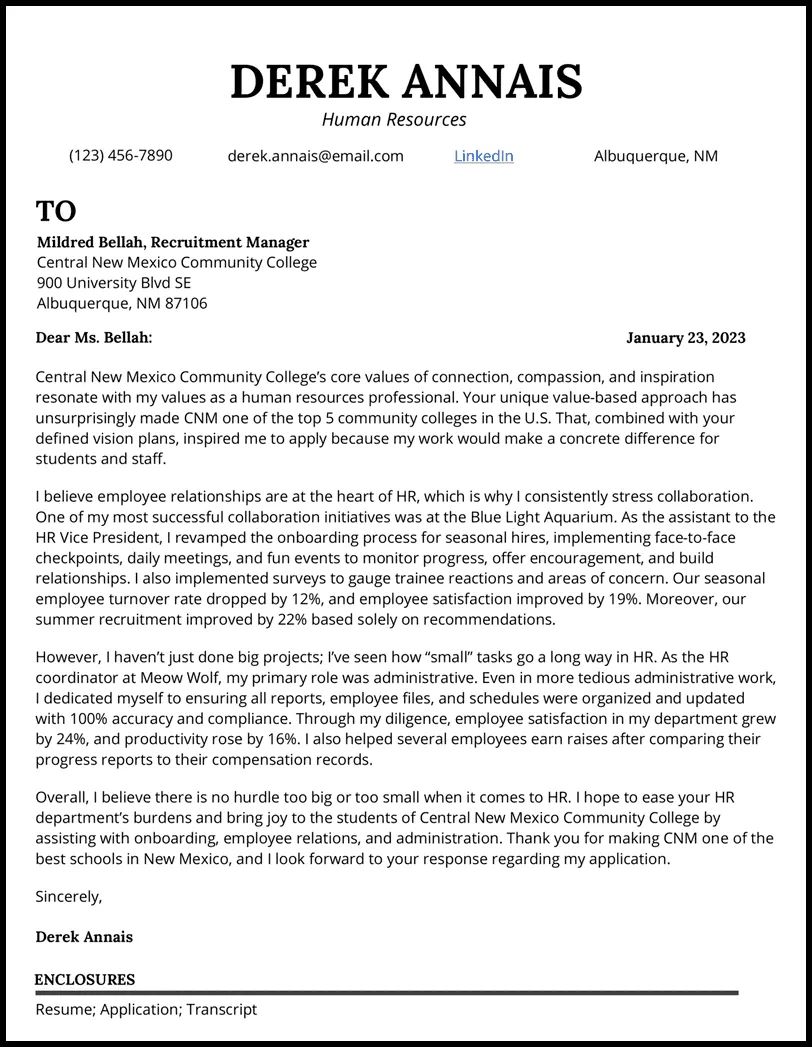
Below is a sample cover letter that you can adapt and tailor to your specific needs. Remember to replace the bracketed information with your own details and customize it to fit the job requirements. This example will help you visualize the structure and style of an effective cover letter, providing a solid foundation for your application. Review the example thoroughly and make the necessary adjustments to ensure it accurately reflects your skills and experience.
Sample Cover Letter Body Paragraphs
Here are some sample body paragraphs you can adapt for your cover letter, offering you options for highlighting your achievements and skills. Remember to tailor these paragraphs to the specific requirements of the job description. This ensures you present your qualifications in the most relevant and compelling way possible. Use these as a starting point to craft a personalized narrative that highlights your unique strengths and experiences.
Common Mistakes to Avoid
Avoid common pitfalls that can weaken your cover letter and hurt your chances of getting an interview. Be aware of what not to do to make a positive impact. These include generic language, lack of customization, and excessive length. Paying attention to these details can significantly improve the effectiveness of your letter. By avoiding these common errors, you will increase your chances of getting the attention you need. Being aware of these errors will allow you to present a polished and professional cover letter that will help you land the interview.
Generic Language and Clichés
Avoid using generic phrases and clichés that can make your cover letter sound uninspired and unoriginal. Phrases like “I am a team player” or “I am a hard worker” are overused and don’t provide any specific information about your skills or experience. Instead, use action verbs and provide specific examples to demonstrate your abilities. For example, instead of saying “I am a team player,” describe a situation where you successfully collaborated with a team to achieve a specific goal. By using specific examples, you show the hiring manager what you are capable of, making a more powerful and memorable impression.
Failing to Tailor Your Letter
Sending out the same cover letter to multiple employers is a surefire way to get your application rejected. Tailor your cover letter to each specific job and company. Demonstrate that you have taken the time to understand the company’s needs and that you are genuinely interested in the position. This shows the hiring manager that you are not just sending out mass applications. Customize your cover letter by highlighting the skills and experiences that are most relevant to the job description and by addressing the specific requirements of the role.
Additional Tips for HR Manager Cover Letters
Enhance your cover letter even further by incorporating additional strategies that will make it more impactful. These tips cover various aspects, from showcasing leadership to highlighting certifications. Consider these suggestions to strengthen your application and increase your chances of securing an interview. This will make you more competitive.
Showcasing Leadership and Teamwork
Highlight your leadership skills and your ability to work effectively in a team environment. HR managers often lead teams, so demonstrating your ability to inspire and manage others is important. Provide examples of how you have successfully led initiatives, motivated teams, and fostered a positive work environment. If you have experience in team building or conflict resolution, make sure to mention it. Emphasize your ability to collaborate with others and to communicate effectively to achieve common goals. Demonstrate that you can effectively guide and motivate a team.
Highlighting Relevant Certifications
If you hold any relevant certifications, such as a SHRM-CP, SHRM-SCP, or PHR/SPHR, be sure to highlight them in your cover letter. These certifications demonstrate your commitment to the HR profession and your expertise in the field. Mention the certification by name and provide the issuing organization and the date you earned it. This will add credibility to your application and make you appear more qualified. Make sure to mention certifications to enhance your application.
Final Thoughts on HR Manager Cover Letters
Crafting a compelling cover letter is a critical step in your job search for an HR Manager position. By following the guidelines and examples provided in this guide, you can create a cover letter that effectively showcases your skills, experience, and passion for the field. Remember to tailor your letter to each specific job, highlight your achievements, and proofread carefully. Good luck with your job search!