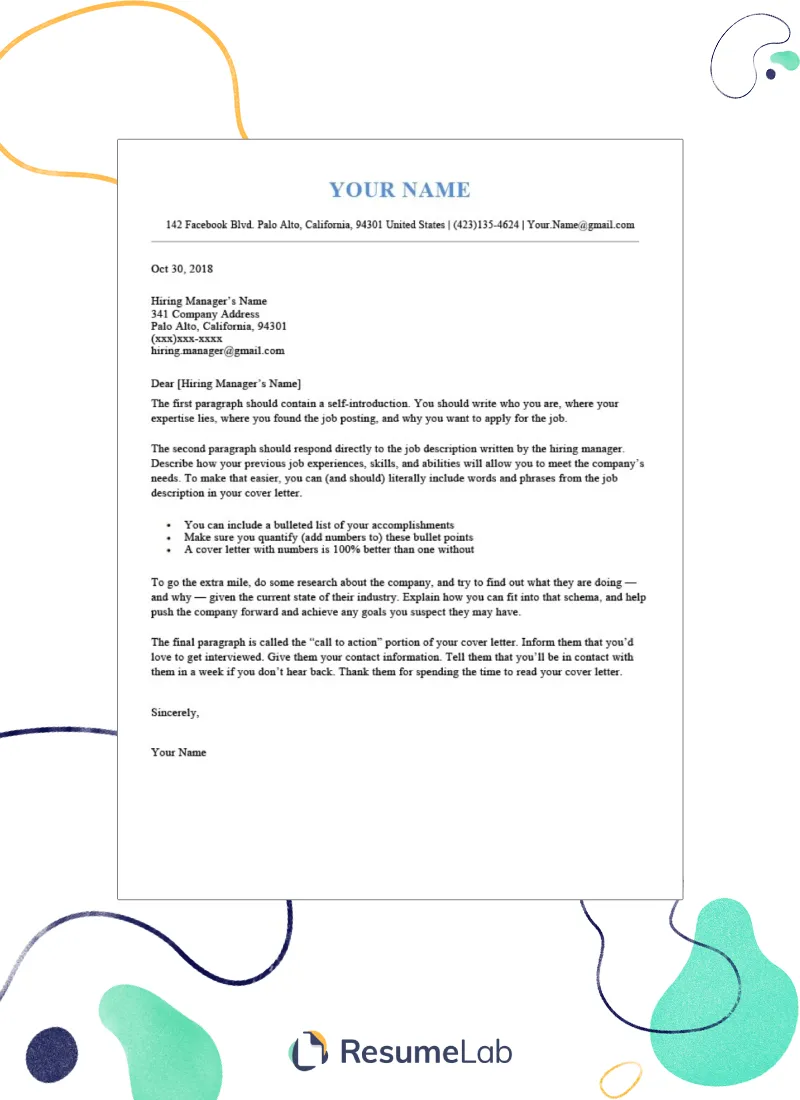
Cover Letter Essentials
A cover letter is your first chance to make a strong impression on a potential employer. It complements your resume, providing a narrative that highlights your skills, experience, and enthusiasm for the specific role. Unlike a resume that simply lists facts, a cover letter allows you to showcase your personality and explain why you are the ideal candidate. It should be tailored to each job application, demonstrating your understanding of the company and the position. A well-crafted cover letter can significantly increase your chances of landing an interview. It’s your opportunity to shine, so make sure you make the most of it. Remember, the goal of your cover letter is to convince the hiring manager to read your resume.
Highlight Your Skills
Your cover letter should be a showcase of your skills that directly align with the job requirements. Carefully review the job description and identify the key skills and qualifications the employer is seeking. Then, in your cover letter, provide specific examples of how you’ve demonstrated those skills in previous roles or projects. Use clear, concise language, and avoid generic statements. Instead of saying you are a good communicator, describe a situation where you effectively communicated with a team to achieve a specific goal. This helps the hiring manager quickly see the value you bring to the table. Remember to focus on the skills that are most relevant to the position you are applying for, ensuring you create a targeted and compelling message that resonates with the employer. Highlight your relevant experience to make a strong impression.
Quantify Your Achievements

Whenever possible, quantify your achievements to demonstrate the impact you’ve made in previous roles. Instead of saying you improved sales, state the percentage increase you achieved. If you managed a project, mention the budget and the timeline you adhered to. Numbers and data provide concrete evidence of your capabilities and make your accomplishments more impactful. They give the hiring manager a clear understanding of your contributions and your potential value to their organization. Quantifiable achievements are much more compelling than vague claims. By providing specific metrics, you create a strong case for why you are the best candidate. For example, “Increased customer satisfaction by 15%” is far more compelling than “Improved customer satisfaction.”
Tailor Your Letter
A generic cover letter sent to multiple companies is unlikely to impress. Tailor each cover letter to the specific job and company you are applying to. Research the company, understand its values, and address the specific requirements outlined in the job description. Customize your letter to reflect your understanding of the role and explain why you are a good fit for the company culture. Mention specific projects, initiatives, or goals that resonate with the company’s mission. Personalization shows that you have taken the time to learn about the organization and are genuinely interested in the opportunity. This effort demonstrates your commitment and increases your chances of getting noticed. Tailoring involves using the company’s name, the hiring manager’s name (if you can find it), and addressing the specific needs and requirements of the job. This makes your cover letter more engaging and relevant.
Use Action Verbs
Start each sentence with action verbs to make your cover letter more dynamic and engaging. Action verbs add energy and show that you are a proactive, results-oriented individual. Avoid passive language and replace it with verbs that demonstrate your accomplishments and responsibilities. For example, instead of saying “Responsibilities included managing projects,” use verbs such as “Managed projects,” “Led teams,” or “Implemented strategies.” This approach allows you to highlight your skills and achievements in a clear and concise manner. Action verbs paint a vivid picture of your contributions and help the hiring manager quickly grasp your experience and capabilities. This also shows the hiring manager what you’re capable of and will make a great impression.
Proofread Meticulously

Before submitting your cover letter, proofread it carefully for any grammatical errors, spelling mistakes, or typos. These errors can undermine your credibility and create a negative impression. Ask a friend or family member to review your cover letter as well, as a fresh pair of eyes can often catch mistakes that you may have missed. Ensure that your cover letter is free of errors and is polished to perfection, as this reflects your attention to detail and professionalism. Proofreading also helps to ensure your writing flows well and is easy to understand. A well-written, error-free cover letter demonstrates your respect for the opportunity and commitment to excellence, increasing your chances of getting noticed and making a positive impact on the hiring manager. A typo can ruin everything.
Additional Tips for a Stellar Cover Letter
Formatting and Design
Pay attention to the formatting and design of your cover letter. Use a professional-looking font, such as Times New Roman or Arial, and maintain a consistent font size throughout. Ensure there is appropriate spacing between paragraphs and sections for easy readability. Avoid using excessive colors or graphics that might distract the reader. Your cover letter should be clean, organized, and visually appealing. Formatting the document correctly can make a huge difference in how it is perceived by potential employers. A well-formatted cover letter is a reflection of your attention to detail and organizational skills.
Addressing the Hiring Manager

Whenever possible, address your cover letter to a specific person, such as the hiring manager or the recruiter. Research the company website or LinkedIn to find the name of the person responsible for hiring. Addressing your letter to a specific individual shows that you have taken the time to learn about the company and are genuinely interested in the opportunity. Avoid generic greetings like “To Whom It May Concern” or “Dear Sir/Madam,” which can make your cover letter feel impersonal. Using the hiring manager’s name adds a personal touch that demonstrates your interest and respect, and it can help you to stand out from other applicants.
Following Up
After submitting your cover letter and resume, it is important to follow up with the hiring manager or recruiter. Send a polite email a week or two after submitting your application to reiterate your interest in the position and inquire about the status of your application. This demonstrates your enthusiasm and initiative, showing the employer that you are serious about the opportunity. If you do not hear back after a reasonable period, consider sending a follow-up email or making a phone call. Keep the tone professional and concise, reiterating your interest in the role and emphasizing your qualifications. Following up demonstrates your professionalism and persistence.