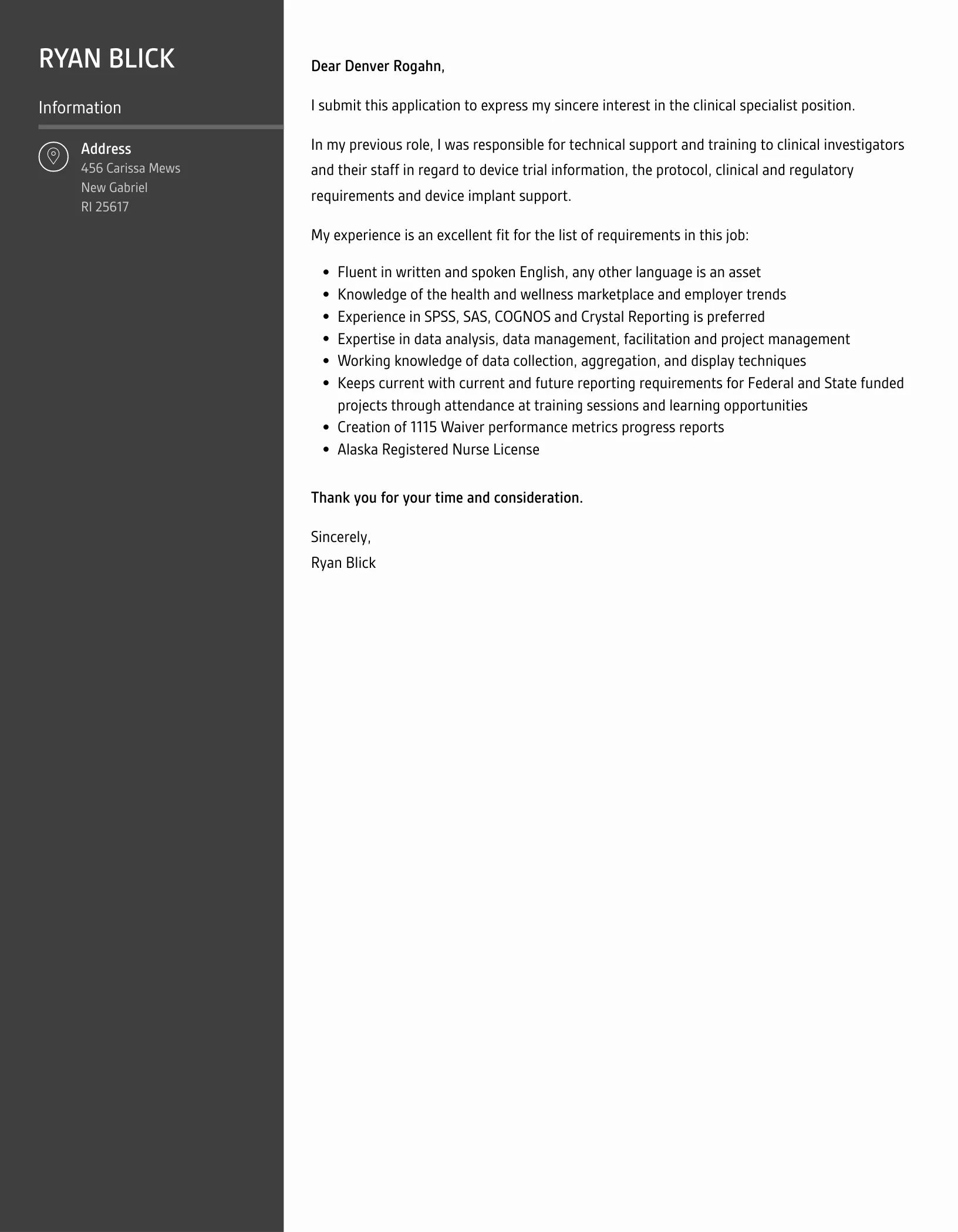
The Power of a Clinical Specialist Cover Letter
A well-crafted clinical specialist cover letter is your initial handshake with a potential employer. It’s your opportunity to make a strong first impression and demonstrate why you are the ideal candidate for the role. Unlike your resume, which provides a factual overview of your experience, your cover letter allows you to showcase your personality, enthusiasm, and understanding of the specific job and company. It’s a crucial tool in setting yourself apart from other applicants and securing an interview. A compelling cover letter not only reiterates your qualifications but also tells a story, connecting your skills and experience to the employer’s needs and aspirations.
What to Include in Your Cover Letter
Your clinical specialist cover letter should be comprehensive, highlighting key aspects of your professional background and demonstrating your suitability for the position. Start by addressing the hiring manager directly, if possible, using their name to personalize your letter. The body of your letter should outline your relevant skills, experience, and accomplishments. Always tailor your letter to match the specific job requirements, referencing the job description. Include details about why you’re interested in the role and company, showcasing your research and understanding. Conclude with a strong call to action, expressing your enthusiasm and a clear indication of your availability for an interview.
Highlighting Your Skills and Experience

Your cover letter is the place to shine a spotlight on your relevant skills and experience. Avoid simply listing your qualifications. Instead, demonstrate how your skills align with the job requirements. Provide specific examples from your previous roles that showcase your achievements and how you’ve contributed to positive outcomes. Use action verbs to describe your accomplishments and quantify your results whenever possible. For instance, instead of saying ‘Managed patient care,’ you could say ‘Managed and improved patient outcomes by 15% through implementation of new protocols.’ This approach not only emphasizes your capabilities but also provides concrete evidence of your value.
Relevant Skills to Showcase
When detailing your skills, focus on those that are most relevant to the clinical specialist position. These typically include clinical expertise, patient assessment and care planning, communication and interpersonal skills, problem-solving, and critical thinking abilities. Highlight any specialized skills such as knowledge of specific medical devices, therapeutic areas, or patient populations. Also, don’t forget to mention soft skills like leadership, teamwork, and adaptability. These attributes are equally important for success in a clinical specialist role. Back up each skill with an example of how you’ve used it effectively in a previous role, and always consider the employer’s specific needs.
Experience to Highlight
Your experience is the core of your cover letter. Focus on the roles and experiences that are most pertinent to the clinical specialist position. Detail your responsibilities and the outcomes you achieved in previous roles, especially those that demonstrate your ability to work with patients, manage clinical programs, or provide training and support. Quantify your accomplishments whenever possible, for instance, stating the number of patients you’ve worked with, the success rate of your training programs, or the improvements you’ve made in patient care processes. Emphasize experiences where you’ve taken initiative or demonstrated leadership, especially if the job description emphasizes these qualities.
Tailoring Your Cover Letter

A generic cover letter is unlikely to impress a hiring manager. To stand out, you must tailor your letter to the specific job and company. This demonstrates that you’ve taken the time to understand the role and the organization’s needs. Review the job description carefully, identifying the key requirements and aligning your skills and experience accordingly. Use the language of the job description, incorporating relevant keywords. Personalize your letter by referencing the company’s mission, values, or recent achievements. Showing that you are genuinely interested in the company and the specific role significantly increases your chances of success.
Researching the Company
Before writing your cover letter, research the company thoroughly. Visit their website to learn about their mission, values, and recent initiatives. Look for news articles, press releases, and social media updates. Understanding the company’s culture and strategic goals will help you tailor your letter effectively. Identify the specific challenges the company is facing or the opportunities they are pursuing and explain how your skills and experience can contribute to their success. Demonstrating this level of understanding shows initiative and a genuine interest in the role and the organization.
Customizing for the Role
Once you understand the company, customize your cover letter for the specific role. Carefully analyze the job description to identify the essential skills, experience, and qualifications. Use these as a framework for structuring your letter. Highlight the specific ways your background aligns with the requirements, using examples that illustrate your ability to meet their needs. If the job description emphasizes certain software, skills, or responsibilities, be sure to mention them directly and provide evidence of your experience. Also, consider the company culture and tailor your writing style to match their tone and values.
Formatting and Presentation

The formatting and presentation of your cover letter are just as important as its content. A well-formatted letter is easy to read and makes a positive first impression. Use a professional font, such as Times New Roman, Arial, or Calibri, with a size between 10 and 12 points. Maintain consistent formatting throughout the letter, including spacing, margins, and headings. Ensure your letter is well-organized with clear sections and paragraphs, and use bullet points or numbered lists to highlight key information. This will help the hiring manager quickly understand your qualifications and experience.
Key Formatting Elements
Essential formatting elements include your contact information at the top of the letter, followed by the date and the hiring manager’s contact information. Use a professional salutation, such as ‘Dear Mr./Ms. [Last Name]’ or ‘Dear Hiring Manager,’ when the name is unknown. The body of the letter should consist of several paragraphs, each addressing a specific aspect of your qualifications. Keep paragraphs concise and easy to read. Use a professional closing, such as ‘Sincerely’ or ‘Best regards,’ followed by your typed name. Make sure to proofread the entire letter for any formatting errors.
Proofreading and Editing
Proofreading and editing are critical steps in the cover letter writing process. Errors in grammar, spelling, and punctuation can undermine your credibility and diminish your chances of getting an interview. After writing your letter, review it carefully for any mistakes. Use a grammar checker and spell-check tool, but don’t rely on them completely. Read your letter out loud to catch awkward phrasing or sentences that don’t flow well. It’s also beneficial to have a friend or colleague review your letter, as a fresh pair of eyes can often spot errors you may have missed.
Common Mistakes to Avoid

Avoid common mistakes that can hurt your cover letter. These errors can instantly disqualify you from consideration. Be sure to avoid generic templates, typos, and grammatical errors. Ensure your letter is clear, concise, and tailored to the specific role and company. Make sure you don’t just repeat your resume. The cover letter should provide additional context and highlight the skills and experiences that make you uniquely qualified for the position. Also, be mindful of tone and language, using professional and enthusiastic language throughout your letter. The right tone can make all the difference!
Generic Language
Generic language is a major turnoff for hiring managers. Avoid using clichés or phrases that could apply to any job or candidate. Instead, use specific examples and concrete details to demonstrate your skills and experience. Instead of saying ‘I am a team player,’ describe a specific instance where you collaborated effectively with a team to achieve a particular goal. Similarly, avoid overly general statements like ‘I am a hard worker.’ Instead, quantify your achievements and demonstrate the results of your efforts. The more specific you are, the more impactful your cover letter will be.
Typos and Grammatical Errors
Typos and grammatical errors are a big no-no in cover letters. They suggest a lack of attention to detail and can give the impression that you don’t take the application process seriously. Always proofread your letter carefully before submitting it. Use spell-check and grammar-check tools, but don’t rely on them completely. Read your letter out loud to catch any awkward phrasing or errors that you may have missed. Having a friend or colleague review your letter is also highly recommended, as a fresh pair of eyes can often spot errors that you might overlook.
Focusing on What You Can Offer

A successful cover letter emphasizes what you can offer to the employer, not just what you’re looking for. Shift your focus from your needs to the company’s needs. Explain how your skills and experience align with the job requirements and how you can contribute to the company’s goals. Demonstrate how you have solved problems, improved processes, or achieved positive outcomes in previous roles. Highlight your understanding of the clinical specialist field, the company’s market, and what you bring to the table. This approach shows the employer that you’re not just seeking a job but that you’re a valuable asset.
Call to Action and Closing
End your cover letter with a strong call to action. Clearly state your interest in the position and express your desire to be interviewed. Make it easy for the hiring manager to contact you by providing your contact information. Restate your enthusiasm for the role and the company, summarizing why you’re the best candidate. Thank the hiring manager for their time and consideration. This concise but assertive approach can significantly increase the chances of your application moving forward and demonstrates your proactive approach to the job application process. A well-crafted closing solidifies your interest and professionalism.
Expressing Enthusiasm
Expressing genuine enthusiasm is a key element of a winning cover letter. Let your passion for the role and the company shine through. Use positive and enthusiastic language to convey your excitement. Show that you’ve done your research and that you’re genuinely interested in the opportunity. Mention specific aspects of the company or role that appeal to you, and explain why you believe you would be a good fit. A genuine display of enthusiasm can help you stand out from other applicants and make a memorable impression.
Providing Contact Information

Always provide your contact information in a prominent and easily accessible location. Include your name, phone number, email address, and, if applicable, your LinkedIn profile URL. Double-check that your contact information is accurate and up-to-date. Ensure your email address is professional-sounding. Providing clear and accessible contact information simplifies the hiring manager’s task and increases the likelihood of your application moving forward in the recruitment process. Make it easy for them to reach you.