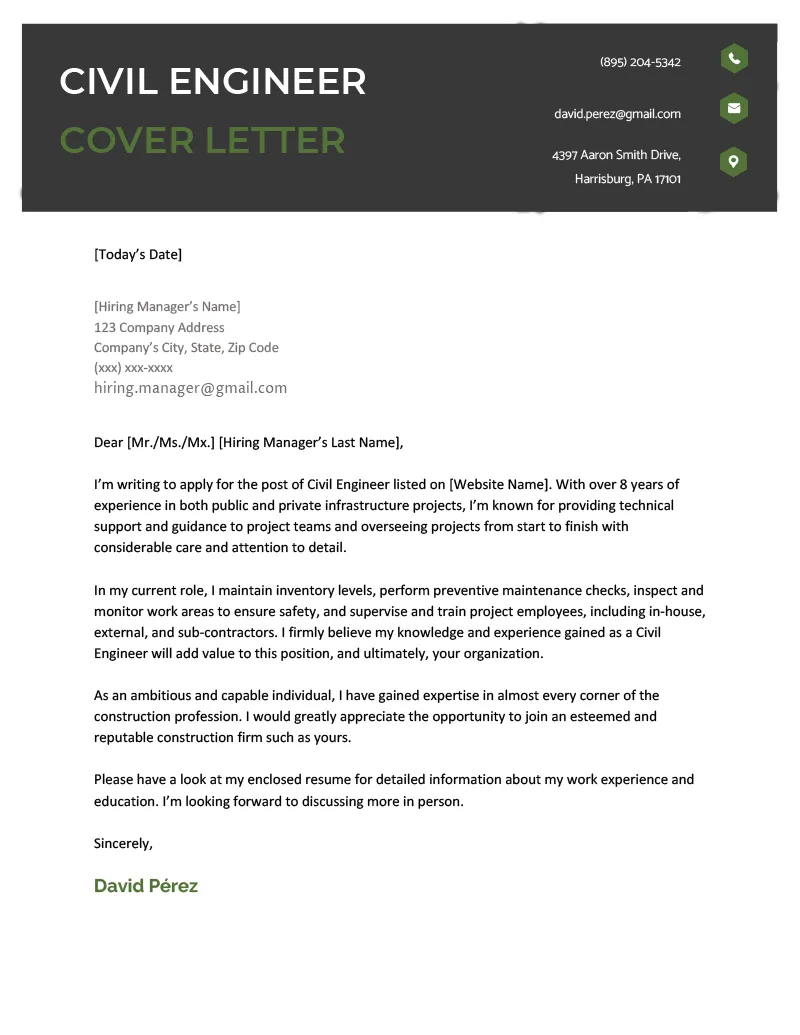
Civil Engineer Cover Letter Sample Must-Knows
A well-crafted cover letter is a crucial component of any civil engineer’s job application. It serves as your first introduction to a potential employer, providing an opportunity to showcase your skills, experience, and enthusiasm for the role. This guide offers essential insights and a sample cover letter to help you create a compelling document that captures attention and increases your chances of landing an interview. The goal is to not only present your qualifications but also to demonstrate your understanding of the specific job requirements and your passion for civil engineering. A strong cover letter can significantly enhance your application, setting you apart from other candidates and highlighting your suitability for the position.
Understanding the Importance of a Cover Letter
The importance of a cover letter in the job application process cannot be overstated. It’s not merely a formality; it’s a vital tool that provides context to your resume, allowing you to elaborate on your experiences and demonstrate how your skills align with the specific job requirements. A well-written cover letter offers a chance to present your personality, express your genuine interest in the company and the role, and explain any potential gaps in your resume. This is where you can tell your story and convince the hiring manager that you are the perfect fit for the position. By personalizing your letter and highlighting your relevant achievements, you can create a lasting positive impression and significantly improve your chances of securing an interview.
Why a Cover Letter Matters for Civil Engineers

For civil engineers, a cover letter is especially critical. It allows you to demonstrate your technical skills and project management experience, which are vital in this field. Civil engineering roles require both technical expertise and the ability to communicate effectively, and your cover letter is the ideal place to showcase these capabilities. You can describe specific projects you’ve worked on, the challenges you overcame, and the results you achieved. It’s also an opportunity to mention any specialized software or certifications you possess. By highlighting these aspects, you demonstrate to the hiring manager that you not only have the technical skills required but also the ability to contribute meaningfully to their projects. A well-crafted cover letter can also highlight your understanding of the company’s values and goals, demonstrating your commitment to becoming a valuable member of their team.
Highlighting Key Skills and Experiences
Your cover letter should strategically highlight your most relevant skills and experiences. Focus on the qualifications that align with the job description, emphasizing any specific projects or accomplishments that demonstrate your abilities. When highlighting key skills, you should mention proficiency in relevant software such as AutoCAD, Civil 3D, or SAP2000. Also, be sure to mention your experience with design, construction, and project management. For example, if the job requires experience with structural engineering, be sure to highlight projects where you demonstrated those skills. Always quantify your achievements whenever possible using numbers and data. This helps the hiring manager easily understand your contributions and the value you bring to the role. Tailor your cover letter to each specific job you apply for, ensuring that you address the requirements and highlight the skills and experiences most relevant to the position.
Essential Sections to Include in Your Cover Letter
A strong cover letter should include several essential sections. These sections work together to provide a comprehensive overview of your qualifications and demonstrate your enthusiasm for the position. The structure should be clear, concise, and professional. Every section contributes to creating a compelling narrative that captures the hiring manager’s attention.
Your Contact Information

Begin your cover letter by including your contact information at the top. This should include your full name, phone number, email address, and, optionally, your LinkedIn profile URL. This information ensures the hiring manager can easily reach you for an interview or to request further information. Ensure that your email address and LinkedIn profile project a professional image.
The Hiring Manager’s Information
If possible, address your cover letter to a specific person. Research the hiring manager’s name and title and include their information. Addressing the letter to a specific individual shows that you’ve taken the time to learn about the company and demonstrates a higher level of interest. If you cannot find the hiring manager’s name, use a general greeting such as “Dear Hiring Manager” or “Dear [Company Name] Hiring Team.” The objective is to show the hiring manager you know who you are applying to.
A Compelling Opening Paragraph
Your opening paragraph should immediately grab the reader’s attention. State the position you’re applying for and briefly explain why you’re interested. Mention where you found the job posting and express your enthusiasm for the company or the role. This opening should establish your interest and prompt the hiring manager to continue reading. The opening sets the tone for the rest of the letter, so make it count. Clearly state your intent and make it evident why this role is an excellent fit for you.
Showcasing Your Skills and Projects

The body of your cover letter should focus on highlighting your relevant skills and experiences. Describe specific projects you’ve worked on, focusing on your role and the results you achieved. Mention any technical skills, software proficiency, or certifications that align with the job description. Use action verbs to describe your responsibilities and accomplishments. For example, instead of saying “I was responsible for,” say “I managed,” “I designed,” or “I implemented.” It’s essential to provide tangible evidence of your abilities. Show, don’t just tell, by providing detailed examples and quantifiable results.
Quantifying Achievements
Quantify your achievements whenever possible. Use numbers and data to demonstrate the impact of your work. For instance, instead of saying “I improved project efficiency,” say “I improved project efficiency by 15% by implementing X.” Quantifiable achievements make your qualifications more compelling and provide concrete evidence of your capabilities. They show the hiring manager the value you bring to the table and highlight your ability to deliver results. Use metrics such as time saved, cost reductions, or improvements in project outcomes to show your impact.
Tailoring Your Letter to the Job
Always tailor your cover letter to the specific job you’re applying for. Review the job description carefully and identify the key requirements and qualifications. Then, highlight the skills and experiences that directly address those requirements. Customize your letter to showcase how your background aligns with what the employer is seeking. Generic cover letters often get discarded. Tailoring your letter shows that you’ve taken the time to understand the role and the company and that you’re genuinely interested in the opportunity. This personalization significantly increases your chances of making a positive impression and getting noticed by the hiring manager.
Expressing Enthusiasm and Closing Professionally

In your closing paragraph, reiterate your interest in the position and express your enthusiasm for the opportunity. Thank the hiring manager for their time and consideration. Include a call to action, such as stating that you are available for an interview and eager to discuss how you can contribute to their team. Close your cover letter with a professional closing, such as “Sincerely” or “Best regards,” followed by your name. This final impression reinforces your interest and professionalism.
Common Mistakes to Avoid
Avoiding common mistakes is critical to ensuring your cover letter effectively communicates your qualifications. Several errors can undermine your application and make a negative impression on the hiring manager. Be vigilant about these issues and proofread your letter carefully.
Generic Cover Letters
One of the biggest mistakes is sending a generic cover letter. These letters are often perceived as impersonal and demonstrate a lack of interest in the specific job or company. Always tailor your cover letter to the specific position and company you’re applying to. Research the company, understand its values and goals, and customize your letter to show how your skills and experience align with the company’s needs. Taking the time to personalize your cover letter significantly increases your chances of standing out from other candidates. Generic letters are usually discarded without a second glance.
Typos and Grammatical Errors

Typos and grammatical errors can significantly detract from your professionalism and credibility. Always proofread your cover letter carefully before submitting it. Ask a friend or colleague to review it as well. Errors suggest a lack of attention to detail, which can be a significant red flag to hiring managers. Ensure your cover letter is free of spelling mistakes, grammatical errors, and punctuation issues. Proofreading is a crucial step in ensuring your cover letter effectively represents your skills and professionalism. These mistakes can damage your chances of getting an interview and should be avoided at all costs.
Focusing on What You Want, Not What You Can Offer
Focus on what you can offer the employer rather than what you want from the job. Highlight your skills, experience, and how you can contribute to the company’s success. While it’s okay to mention your career goals, the primary focus should be on how you can solve the employer’s problems and help them achieve their objectives. Framing your cover letter in terms of your value proposition and the positive impact you can make will capture the hiring manager’s attention. Demonstrate how your skills and experience align with the company’s needs and goals to illustrate your value as a potential employee.
Formatting and Presentation Tips
The formatting and presentation of your cover letter are just as important as the content. A well-formatted cover letter is easier to read and projects a professional image. Consider the overall look of your cover letter, and keep in mind that readability and visual appeal are key.
Font and Readability

Choose a clear and professional font, such as Times New Roman, Arial, or Calibri. Keep the font size between 10 and 12 points to ensure readability. Avoid using overly fancy or decorative fonts, as these can distract from the content. Ensure that your letter is easy to read and visually appealing. Proper font selection contributes to the overall professional impression your cover letter creates.
Length and Structure
Keep your cover letter concise, ideally no longer than one page. Use a clear and logical structure with well-defined sections. Use headings and bullet points to break up the text and make it easy to scan. Ensure your letter is organized, with a clear introduction, body, and conclusion. The goal is to provide a comprehensive overview of your qualifications in a format that is easy for the hiring manager to follow.
Proofreading and Editing
Proofread your cover letter carefully for any errors in spelling, grammar, and punctuation. Ask a friend or colleague to review it as well. Fresh eyes can often catch mistakes you might miss. Pay close attention to the details to ensure that your letter is error-free. Thorough proofreading is vital for presenting a polished and professional image. Before submitting, ensure there are no typos and the language is clear and concise.
Civil Engineer Cover Letter Sample and Templates
Using a well-structured sample cover letter can save you time and ensure that you include all the necessary information. Several resources offer civil engineer cover letter templates that you can customize to fit your specific needs. These templates provide a starting point, helping you organize your thoughts and craft a compelling document.
Where to Find Cover Letter Examples
You can find numerous cover letter examples online. Websites such as Indeed, Resume.io, and Zety offer a wide range of samples for various professions, including civil engineering. Review these examples to get ideas for formatting, content, and tone. Remember to adapt the examples to reflect your unique qualifications and experiences, creating a personalized cover letter that stands out.
Customizing Templates for Your Needs
Once you have a cover letter template, customize it to reflect your skills, experience, and the specific job you’re applying for. Replace the sample text with your information, highlight your relevant qualifications, and tailor the language to match the job description. The key is to create a cover letter that is both professional and unique to you. Modify the template to emphasize the most critical aspects of your background and align with the needs of the potential employer. This personalization is what will set your application apart from the crowd.