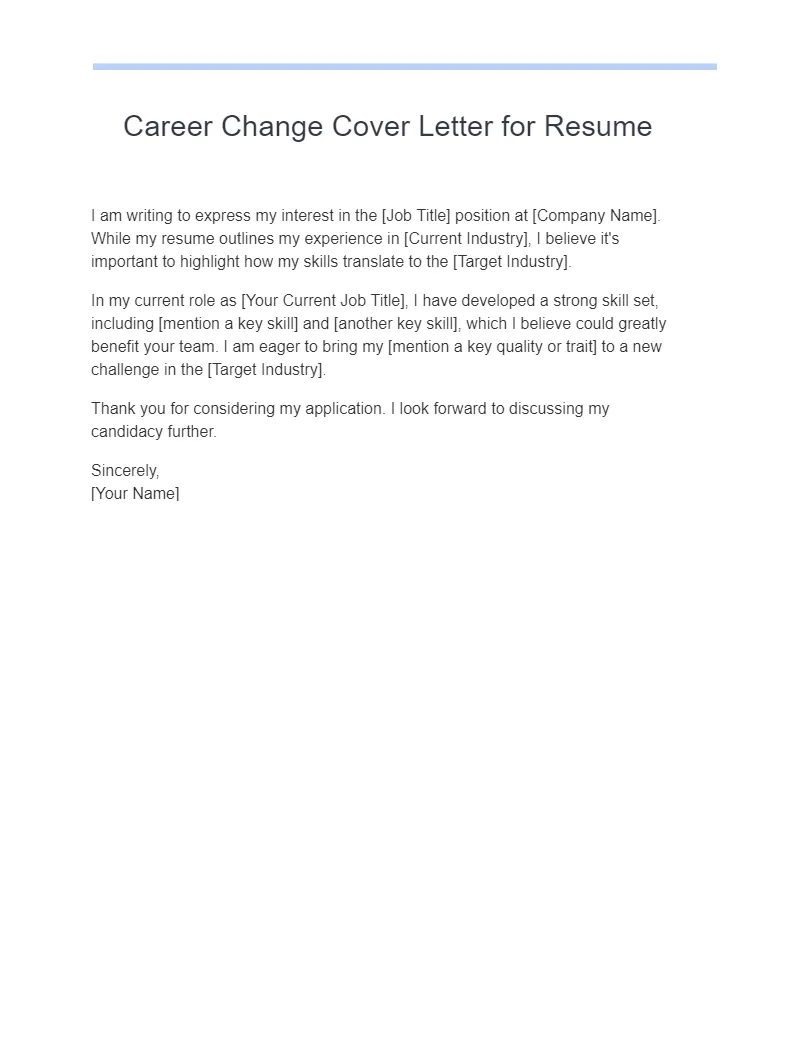
5 Resume Cover Letter Tips for Career Change
Embarking on a career change is a significant step, and your resume and cover letter are your primary tools for making a compelling case. Unlike a traditional job search, you’re not just showcasing your experience; you’re also demonstrating why your skills and background are relevant to a new field. This requires a strategic approach. This guide provides 5 essential tips to help you craft a resume and cover letter that effectively highlights your qualifications, addresses the career change, and increases your chances of landing your desired role. A well-crafted cover letter and resume can make all the difference in helping you bridge the gap and successfully transition into a new career. This is your opportunity to tell a story, connect with potential employers, and prove your potential beyond the confines of your past work history. By focusing on transferable skills, quantifying accomplishments, tailoring to the industry, and addressing the change head-on, you will make a significant impact.
Highlighting Transferable Skills
One of the most critical aspects of a career change resume cover letter is highlighting transferable skills. These are the skills you’ve developed in your previous roles that are applicable to the new industry or position. These skills become the bridge to connect your past experience to your future goals. Identify the skills that are most relevant to the jobs you’re targeting. Do you have project management experience, even if it was in a different field? Were you responsible for communication, problem-solving, or leadership? These are all examples of transferable skills. Your cover letter and resume should emphasize how these skills align with the requirements of the new role. For example, if you’re transitioning from marketing to project management, you might highlight your experience in campaign planning, deadline management, and team collaboration. Providing specific examples of how you’ve used these skills will add more value.
Examples of Transferable Skills

- Communication
- Problem-solving
- Leadership
- Project management
- Time management
- Teamwork
- Customer service
- Adaptability
Ensure that your resume and cover letter clearly and concisely highlight these transferable skills, making the connection between your past experiences and the requirements of the new role apparent to the reader. You should consider the role you are going for. Focus on what they want. Then, write your resume and cover letter that reflects the skills you have. When highlighting skills, remember to provide concrete examples that illustrate your abilities. Instead of saying, “I am a good communicator,” state, “Successfully managed communication between cross-functional teams, resulting in improved project timelines and outcomes.”
Quantifying Achievements
Quantifying your achievements is another crucial step. Instead of just stating your responsibilities, focus on what you accomplished and the impact you made. Use numbers, percentages, and specific data to demonstrate the value you brought to your previous roles. Quantifying your achievements will add more weight to your resume and cover letter. Whenever possible, include metrics to showcase your success. For example, instead of saying, “Managed social media accounts,” you might say, “Increased social media engagement by 30% in six months by implementing new content strategies.” Use numbers to show what you have done in past roles. These numbers can highlight your skills in a concrete manner. Remember to keep the focus on accomplishments over mere job duties, and be specific about your contributions. Providing these numbers will help set you apart from other candidates.
Examples of Quantifiable Achievements
- Increased sales by 20% in one year.
- Reduced project costs by 15% through effective resource management.
- Improved customer satisfaction scores by 10%.
- Managed a team of 10 employees, consistently exceeding performance goals.
- Developed and implemented a new marketing strategy that generated 500 new leads.
When tailoring your resume for a career change, prioritize quantifying achievements in the new industry. If possible, relate your previous accomplishments to the new field. If you were a teacher, you can say that you taught a class of 30 students and helped each and every student learn about the subject. The main point is to demonstrate your value in a tangible way. This helps employers understand the impact you can make in your new role.
Tailoring to the New Industry

Tailoring your resume and cover letter to the specific industry and job you’re targeting is crucial. This involves researching the industry, understanding the required skills and keywords, and aligning your experience accordingly. Review job descriptions carefully and identify the key skills and qualifications the employer is looking for. This shows that you have researched and that you know what they want. Modify your resume and cover letter to reflect those requirements. Use keywords from the job description throughout your documents, especially in your skills section and bullet points. This helps your resume pass through applicant tracking systems (ATS) and makes your application more relevant to the hiring manager. Also, consider highlighting any industry-specific certifications or training you have. You want to show that you have a genuine interest in the industry and that you understand its needs. Make sure that your application is catered to the specific industry.
Steps for Tailoring
- Research the industry thoroughly.
- Analyze job descriptions for required skills and keywords.
- Customize your resume and cover letter to match these requirements.
- Highlight relevant certifications or training.
- Showcase your understanding of the industry’s needs.
Your goal is to demonstrate that you’re not just applying for a job, but that you are committed to the new industry. Tailoring is not just about changing a few words; it’s about re-framing your experience to resonate with the new industry. The aim is to show the employer that you speak their language and understand the challenges and opportunities within their sector.
Addressing the Career Change
Directly addressing the career change in your cover letter is a must. Ignoring it will only raise questions in the employer’s mind. Acknowledge the transition and explain your motivations for the change. You want to provide a concise explanation of why you’re seeking a new direction. This demonstrates self-awareness and a proactive approach. In your cover letter, clearly state your interest in the new field and how your skills align. This can also demonstrate your passion and commitment to the role. You can also describe any steps you’ve taken to prepare for the change. This might include taking courses, completing certifications, or doing informational interviews. This shows that you are genuinely invested in the new direction. In addition, express your enthusiasm for the new role and what you hope to achieve. Showing enthusiasm in your cover letter can also increase your chances of landing the job. Show your commitment to the new field.
Tips for Addressing the Change

- Acknowledge the career change directly.
- Explain your motivations for the new field.
- Show how your skills are transferable.
- Highlight any steps you’ve taken to prepare.
- Express enthusiasm for the role.
Your goal is to show the employer that you’ve carefully considered this change. Make sure your reasons are authentic and reflect your career goals. It should sound natural and authentic, rather than apologetic or defensive. Your cover letter is your chance to tell your career story and make the case for why you are the right fit for the role. Make your story compelling.
Formatting and Design
The formatting and design of your resume and cover letter are important. The way that you present yourself can have a huge impact on an employer. Choose a professional and easy-to-read layout. Make sure to use a clean font and consistent formatting. Avoid clutter and use white space effectively. Use headings and bullet points to make your information easy to scan. The goal is to make it easy for the reader to quickly understand your qualifications. Your cover letter must also follow the same principles. It should be well-structured, concise, and easy to read. Use a professional tone, and avoid grammatical errors and typos. Make sure the cover letter is easy on the eyes. Poor formatting and design can reflect negatively on your attention to detail and professionalism.
Formatting Best Practices
- Choose a professional font (e.g., Arial, Calibri).
- Use clear headings and subheadings.
- Incorporate bullet points for readability.
- Maintain consistent formatting throughout.
- Proofread carefully for errors.
Consider using a resume template, but ensure it’s not overly complex or distracting. The goal is to make your resume easy to read and visually appealing. Make sure to save your documents in a format that is universally compatible, such as PDF, to ensure that your formatting is preserved. Make the information easily accessible. A well-formatted resume and cover letter make a positive first impression. The design of your resume and cover letter communicates that you are professional and that you pay attention to detail. If there are any errors, the recruiter will be turned away. A well-designed document is a crucial aspect of a successful career change application.
By following these five tips, you can create a compelling resume and cover letter that highlights your skills, addresses your career change, and increases your chances of securing your desired role. Remember, your cover letter and resume are your primary marketing tools. Make sure they are high quality. Good luck with your career change!