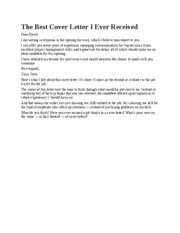
What Makes a Best Cover Letter
The best cover letter isn’t just a formality; it’s your first real chance to shine. It’s a carefully crafted sales pitch, showcasing your unique skills and experiences to a potential employer. A truly great cover letter goes beyond simply restating your resume; it tells a story. It explains why you’re the perfect fit for this job, this company, and highlights your enthusiasm. The key ingredients include tailoring it to each specific role, demonstrating a deep understanding of the company’s needs, and providing concrete examples of your past successes. It’s about making a connection with the reader, conveying your personality, and making them want to learn more about you. This is where you demonstrate your genuine interest, your value proposition, and why you’re the best choice.
Showcase Your Personality in Cover Letter
Let your personality come alive. This isn’t about being overly casual, but about allowing your authentic self to be seen. Use language that reflects your voice. Are you enthusiastic? Analytical? Creative? Let that show. Your cover letter should demonstrate your professional side, but also reveal something unique about you. Think about sharing a brief anecdote or a specific project that highlights your passion. Show how your skills and experiences align with the company culture. A good cover letter is like a conversation, not just a list of qualifications. It shows the human side of you, making you more memorable and relatable. Injecting a little of your personality will make you stand out from the sea of applications, and it’s the key to making a lasting impression on the hiring manager.
Highlighting Your Achievements (Secret 1)

Focus on achievements, not just responsibilities. Instead of saying, “Managed social media accounts,” try “Increased social media engagement by 40% within six months by implementing a new content strategy.” Use action verbs to start each sentence. Describe what you did and the impact of your actions. Quantify your successes whenever possible. Use numbers and data to prove the value you brought to previous roles. Think about your biggest wins in previous positions. What projects were you most proud of? What results did you achieve? Use those examples to demonstrate your capabilities and show how you can contribute to the prospective employer’s success. Your achievements should always be relevant to the job requirements, highlighting the skills and experiences that matter most to the hiring manager.
Quantifying Your Accomplishments (Secret 2)
Numbers make your accomplishments believable. Instead of saying you improved sales, state that you “Increased sales by 15% in Q2 through the implementation of a new customer outreach program.” Provide specific metrics. Include percentages, dollar amounts, time saved, or any other measurable results. Always provide context for your numbers. Explain the situation, the action you took, and the positive outcome. Did you reduce costs? Improve efficiency? Boost customer satisfaction? Showcase these results with precise figures. By quantifying your accomplishments, you provide concrete proof of your abilities and the value you can bring to the role. This level of detail demonstrates a strong understanding of your professional impact.
Tailoring to the Job (Secret 3)
Never use a generic cover letter. Each cover letter needs to be customized for each job. Carefully review the job description. Identify the key skills, qualifications, and experiences the employer seeks. Customize your cover letter to address these requirements directly. Mirror the keywords and phrases used in the job description. Show that you understand the company’s mission, values, and culture. This demonstrates that you’ve put in the effort to learn about the company. Personalize it, showcasing your understanding of their needs and demonstrating your interest in their work. Tailoring your cover letter will significantly increase your chances of making a strong first impression and securing an interview.
Key Skills and Keywords (Secret 4)

Keywords help your cover letter get past applicant tracking systems (ATS) and into the hands of a hiring manager. Identify the key skills and keywords from the job description. Then, integrate these keywords naturally throughout your cover letter. Avoid keyword stuffing. Focus on how you’ve used these skills in past experiences. Use keywords to highlight your experience, achievements, and understanding of the job requirements. Don’t just list keywords; weave them into the narrative. When highlighting your skills, give specific examples of how you’ve used those skills to achieve positive results. Make your cover letter both keyword-rich and easy to read, highlighting your key strengths in a way that resonates with the hiring manager.
Call to Action Closing (Secret 5)
Your closing is your last chance to make an impression. Make it count. Provide your contact information and a clear call to action. Instead of simply saying “Thank you for your consideration,” try “I am eager to discuss how my skills can contribute to your team, and I am available for an interview at your earliest convenience.” or something similar. This shows enthusiasm and initiative. Proofread carefully for any errors. Make sure the tone matches your overall message. A strong closing statement provides a compelling reason for the hiring manager to contact you and demonstrates your keen interest in the position. Make the next step easy for the hiring manager, making it likely they’ll reach out.
Cover Letter Examples to Inspire You
Studying successful cover letter examples provides inspiration and guidance. Find examples that match the type of job you are applying for. Analyze the structure, tone, and language used. See how they showcase achievements, skills, and personality. Look for examples that reflect the industry and the specific roles you are targeting. Adapt these templates to your experiences and qualifications. Online resources are available for cover letter templates and examples. Using these examples can help you to see how others present themselves. Remember to tailor your letter to each job. Always make sure the examples are recent and reflect current best practices.
Final Review and Polish

Reviewing and polishing your cover letter is critical before submission. Proofread for any grammatical errors, spelling mistakes, and typos. Ensure the formatting is consistent and professional. Read your cover letter out loud. Have a friend or colleague review it. Ensure it’s free of errors. Check the tone and style. Is it professional, and does it showcase your personality? Make sure it’s well-organized and easy to read. These final steps can boost your chances of a successful outcome and a job offer. Taking a careful approach will allow you to put your best foot forward and make an excellent impression.
Cover Letter for Success
Crafting a compelling cover letter requires attention to detail and a focus on showcasing your unique value. By highlighting achievements, quantifying your successes, tailoring to the job, using keywords, and crafting a clear call to action, you can set yourself apart. The best cover letters aren’t just about listing qualifications; they’re about telling a story and making a connection. View your cover letter as a tool to open doors. Embrace these strategies, and your cover letters will transform from a task into a powerful tool that helps you land your ideal job. Always remember to tailor your cover letter for each application. Good luck in your job search, and enjoy the process of presenting yourself in the best possible light. Be confident in your abilities and sell yourself effectively. It is possible to get the best cover letter ever!