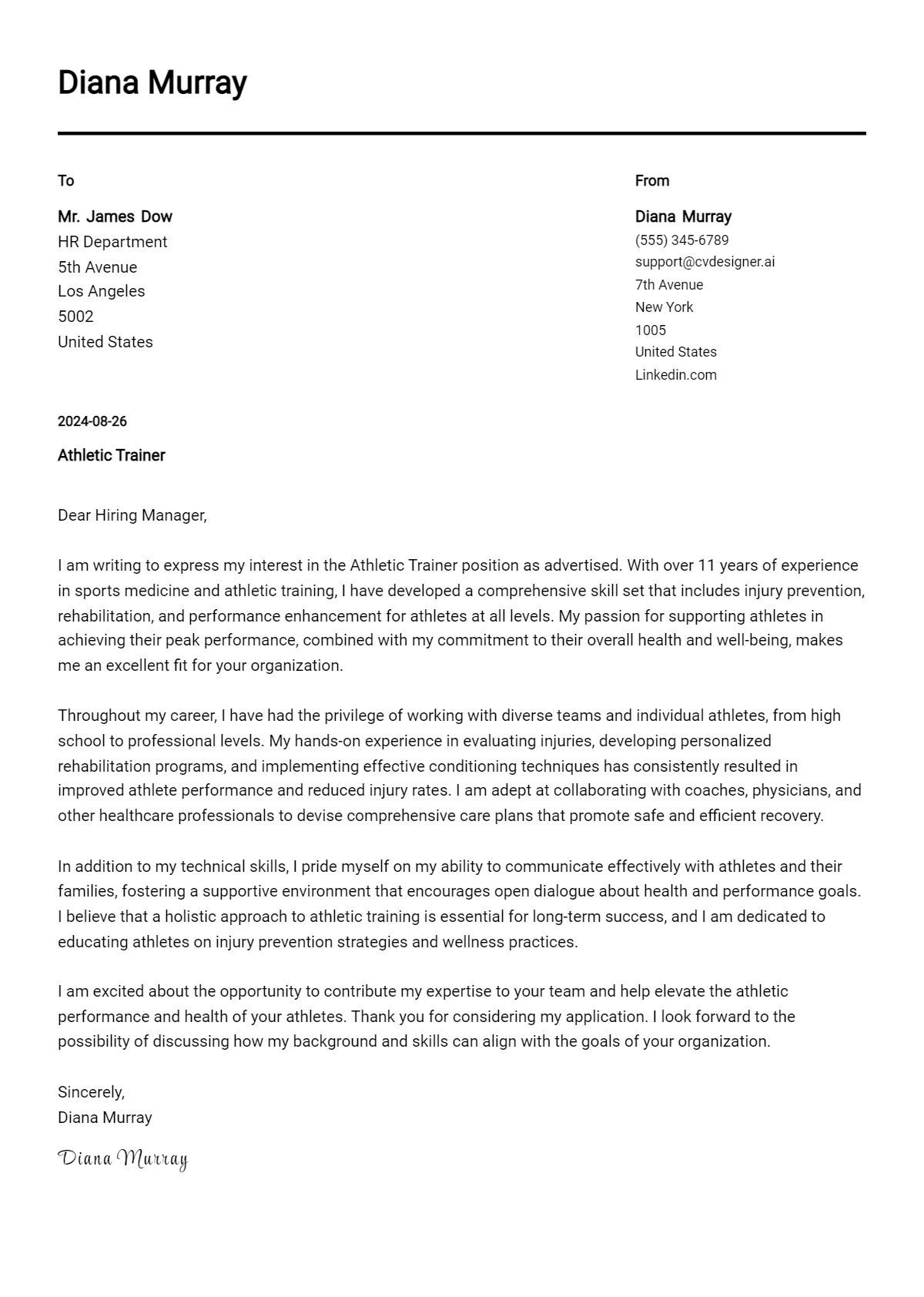
Why You Need an Athletic Trainer Cover Letter
An athletic trainer cover letter is a crucial tool in your job application arsenal. It serves as your first introduction to a potential employer, allowing you to showcase your skills, experience, and personality in a way that a resume alone cannot. Think of it as your personal marketing document, designed to persuade the hiring manager that you are the ideal candidate for the position. In a competitive field like athletic training, a well-crafted cover letter can significantly increase your chances of landing an interview. It provides an opportunity to explain your career goals, elaborate on specific achievements, and demonstrate your understanding of the employer’s needs. Without a compelling cover letter, your application might be overlooked, even if you possess the necessary qualifications.
Understanding the Purpose of a Cover Letter
The primary purpose of an athletic trainer cover letter is to introduce yourself and express your interest in a specific job opening. It’s not just a repetition of your resume; instead, it’s an opportunity to tell a story about why you’re the perfect fit for the role. It should highlight your relevant skills, experience, and qualifications, while also demonstrating your understanding of the employer’s needs and the specific requirements of the position. A well-written cover letter shows that you’ve researched the company and the job, and that you’re genuinely interested in the opportunity. Moreover, it provides a platform to address any potential gaps in your resume or to explain any unique circumstances that might enhance your candidacy.
Key Components of a Winning Athletic Trainer Cover Letter

A successful athletic trainer cover letter comprises several key components, each playing a vital role in making a strong impression. These components work together to create a cohesive and compelling narrative that grabs the reader’s attention and encourages them to learn more about you. The structure and content should be carefully considered to ensure the letter is professional, informative, and tailored to the specific job and employer. Omitting any of these elements could weaken the overall impact of your application and reduce your chances of securing an interview. Ensure each part is written in a clear and concise manner, highlighting your best qualities as an athletic trainer. Begin with your contact details, followed by the employer’s, a professional salutation, and a captivating introduction.
Your Contact Information & Date
At the top of your cover letter, include your contact information such as your name, phone number, email address, and optionally, your LinkedIn profile URL. This ensures that the hiring manager can easily reach you. Underneath your contact information, add the date you are submitting the letter. This provides context and indicates when the letter was written, which is a standard professional practice. Ensure the formatting is clean and easy to read. This sets a professional tone from the very beginning, showcasing your attention to detail and organizational skills. Avoid any formatting inconsistencies; maintain a uniform style to maintain a polished look.
The Recruiter or Hiring Manager’s Information
Directly below your contact information and the date, include the recipient’s details. Ideally, address the cover letter to a specific person if possible, such as the hiring manager or the athletic director. Research the company and the specific role to identify the appropriate person to address the letter to. If you are unable to find a specific name, use a professional title like “Hiring Manager” or “Athletic Director.” Include their full name, title, the company name, and the company’s address. Addressing the letter to a specific person demonstrates your attention to detail and your genuine interest in the position. This personalized approach makes a strong positive impression.
The Salutation

The salutation is your formal greeting and sets the tone for the rest of your cover letter. If you know the hiring manager’s name, use a professional salutation such as “Dear Mr./Ms./Mx. [Last Name].” If you don’t know the hiring manager’s name, using a generic, but still professional, greeting like “Dear Hiring Manager” or “Dear Athletic Director” is acceptable. Avoid overly casual greetings, such as “Hi” or “Hello,” as these might be seen as unprofessional. The salutation is the first interaction you have with the hiring manager, so it is essential to start with the right tone, showing professionalism and respect. Always double-check the spelling and accuracy of the name you’re using. Make sure you use the correct title (Mr., Ms., or Mx.) and spelling to show respect and attention to detail.
Writing a Compelling Introduction
The introduction is your chance to grab the reader’s attention and make a strong first impression. Begin by clearly stating the position you are applying for and where you saw the job posting. Briefly highlight your most relevant qualifications and experience that make you a strong candidate for the role. Consider including a compelling statement that shows your passion for athletic training and your understanding of the organization’s mission or values. Keep the introduction concise, typically no more than three to four sentences. The goal is to quickly capture the hiring manager’s interest and encourage them to continue reading. This initial paragraph sets the stage for the rest of your letter and influences the reader’s perception of your candidacy. Think of it as your elevator pitch, summarizing the key takeaways of your value proposition.
Highlighting Your Athletic Training Skills & Experience
This section is where you showcase your relevant skills and experience. Focus on the skills and experience that are most relevant to the specific job requirements. Provide specific examples of your achievements, using the STAR method (Situation, Task, Action, Result) to demonstrate your abilities. Mention any specializations, certifications, or areas of expertise, such as sports medicine, rehabilitation, or injury prevention. Quantify your accomplishments whenever possible. For example, state the number of athletes you have treated, the success rate of your rehabilitation programs, or any improvements you have made to athletic training protocols. Tailor your descriptions to the job requirements by emphasizing how your skills and experience align with the employer’s needs. Use action verbs and specific details to make your accomplishments memorable.
Showcasing Your Education & Certifications

Include your educational background, specifically your degree in athletic training or a related field. Mention the name of the university or college you attended and the date of your graduation. List any relevant certifications, such as the Board of Certification (BOC) certification and any state licenses you hold. Highlight any specific coursework, specializations, or clinical experiences that are relevant to the job. If you have completed continuing education courses or workshops, be sure to include them as well, demonstrating your commitment to ongoing professional development. Make sure your certifications are current and valid. This information assures the employer you meet all the required standards to practice as an athletic trainer. Also, it’s vital to demonstrate your knowledge and dedication to remaining current with the latest advancements in the field.
Quantifying Your Achievements
Whenever possible, quantify your achievements to demonstrate the impact of your work. Use numbers, percentages, or statistics to provide concrete evidence of your successes. For example, instead of saying you “improved rehabilitation outcomes,” state that you “increased the success rate of rehabilitation programs by 20%.” Similarly, instead of saying you “managed a large caseload of athletes,” specify that you “provided care for over 100 athletes across multiple sports.” Quantifying your achievements gives the hiring manager a clear understanding of your abilities and the value you can bring to the organization. This allows them to see tangible results and assess your performance more effectively. Specific numbers demonstrate your professionalism and your attention to detail, creating a compelling and persuasive cover letter.
Demonstrating Your Passion for Athletic Training
Express your enthusiasm for athletic training. Describe what motivates you and what makes you passionate about helping athletes. Share a personal story or anecdote that illustrates your dedication to the profession and your commitment to providing exceptional care. Discuss your understanding of the role of an athletic trainer in promoting athlete safety, preventing injuries, and facilitating their recovery. Show your understanding of the importance of teamwork, communication, and continuous learning. Demonstrate your ability to work under pressure and the adaptability to handle various situations. Emphasizing your passion makes your application more memorable and shows that you care about making a meaningful contribution. Highlighting your genuine passion will help your cover letter stand out from the competition, making the hiring manager more receptive to considering your application.
Tailoring Your Cover Letter to Each Job

Customize your cover letter for each job application. Do not use a generic cover letter for all applications. Carefully review the job description and identify the key requirements, skills, and qualifications that the employer is seeking. Use these details to tailor your letter. Make sure your letter directly addresses the specific needs of the employer. This demonstrates that you have taken the time to research the position and understand what they are looking for. Include specific examples that highlight how your skills and experience align with the job requirements. Show how you have successfully utilized these skills in past experiences. This customization makes your cover letter more relevant and increases your chances of getting noticed. Always remember that a personalized cover letter is more likely to capture the attention of the hiring manager.
Addressing Specific Job Requirements
Carefully review the job description and address all the specific requirements listed. Highlight your relevant skills, experience, and qualifications to show that you meet the employer’s needs. If the job description specifies certain software proficiency, certifications, or experience levels, make sure to mention them in your cover letter. Provide specific examples of how you have met or exceeded these requirements in your past roles. Demonstrate your ability to perform the essential functions of the job. You can show your expertise in areas like injury assessment, treatment, rehabilitation, and emergency care. Address each requirement, providing evidence of your suitability for the position. This makes your cover letter more compelling. This approach demonstrates your careful attention to detail and your ability to meet the employer’s specific needs.
Using Keywords Effectively
Incorporate keywords from the job description into your cover letter. Identify key phrases and terms used in the job posting, and include them naturally throughout your letter. This helps your application pass through Applicant Tracking Systems (ATS) that scan for relevant keywords. Make sure the keywords are used within the context of your experience and achievements. This makes your cover letter relevant to the specific job. Avoid keyword stuffing. Use keywords appropriately. The letter should still read naturally and demonstrate your understanding of the profession. Focus on incorporating important terms that reflect your skills, experience, and qualifications, ensuring that your cover letter remains readable and engaging. This strategic approach makes your application stand out.
Crafting a Strong Closing

The closing paragraph should reiterate your interest in the position and express your enthusiasm for the opportunity. Restate your key qualifications and reiterate your value to the employer. Thank the hiring manager for their time and consideration. Indicate your availability for an interview and provide your contact information once more. Consider including a call to action, such as, “I am eager to discuss how my skills can contribute to your team.” Make sure that the closing is professional and reflects your commitment to the role. End with a formal closing, such as “Sincerely” or “Best regards,” followed by your full name. Your goal is to leave a lasting positive impression. The closing paragraph is important because it’s the last thing the hiring manager will read before making their decision.
Expressing Your Enthusiasm
Throughout your cover letter, express your genuine enthusiasm for the opportunity and your passion for athletic training. Use strong, positive language to convey your excitement about the position and the organization. Show how you can contribute to their success, such as, “I am excited about the opportunity to apply my skills to contribute to your team’s success.” Demonstrate your knowledge of the organization and its mission. If you have researched the company, you can express your alignment with its values. Your goal is to show that you want this job and you will bring your best to the position. Enthusiasm makes your application more memorable. A sincere display of excitement about the specific role makes you stand out from the other candidates.
Providing Contact Information
Ensure your contact information is easily accessible throughout your cover letter and your resume. Provide your phone number, email address, and any other relevant contact details where the hiring manager can reach you. Place your contact details at the top of your cover letter. Repeat your contact information at the end of your cover letter in your closing. This makes it easy for the hiring manager to contact you for an interview. Proofread your contact information carefully to ensure that it is correct. Double-check your email address to confirm that it is the correct one. Accurate and clear contact information is essential, so the hiring manager can contact you to discuss the opportunity further. Missing or incorrect contact details could cause the hiring manager to overlook your application.
Formatting Your Athletic Trainer Cover Letter

Use a professional and easy-to-read format. Choose a simple and clean font, such as Times New Roman or Arial, and use a font size between 11 and 12 points. Use standard margins (1 inch on all sides) and single-space your text. Break your letter into short, concise paragraphs to make it easy to read. Use bullet points to highlight key skills and accomplishments. Make sure your letter is easy to scan and digest. A well-formatted cover letter is visually appealing. It makes a great impression on the hiring manager. Make sure your formatting is consistent throughout the entire letter. This makes the document look professional and enhances readability. It also shows your attention to detail.
Choosing the Right Font & Font Size
Select a professional and readable font. Times New Roman, Arial, or Calibri are excellent choices. Stick to a font size between 11 and 12 points. This ensures that your letter is easy to read without appearing too small or too large. Choose a font that looks professional and is not overly decorative or distracting. Avoid using script or unusual fonts, as they can be difficult to read. Keep the font consistent throughout your letter. A consistent and professional font choice is essential for making a great first impression. It shows the hiring manager that you pay attention to detail. The goal is to make the content readable and visually appealing.
Ensuring Proper Grammar & Spelling
Proofread your cover letter carefully for any grammatical errors or spelling mistakes. Use a grammar and spell-checker tool, but don’t rely on it entirely. Manually proofread your letter for any errors. Pay close attention to punctuation, capitalization, and sentence structure. Poor grammar and spelling errors can create a negative impression. They will make you look careless and unprofessional. Ask a friend or family member to proofread your letter for an extra set of eyes. Have someone else review your letter to provide feedback and catch any errors you might have missed. Ensure your cover letter is free of errors before submitting it. Proofreading is a key element of a polished and professional cover letter. Using correct grammar and spelling assures that your cover letter is taken seriously.
Proofreading Your Cover Letter
Proofreading is the most important step in finalizing your cover letter. Read your cover letter carefully, word by word, to identify any mistakes. Check for grammatical errors, spelling mistakes, and punctuation errors. Read the letter aloud to listen for any awkward phrasing or unclear sentences. Ask a friend, family member, or career counselor to review your letter and provide feedback. They can spot mistakes you might have missed. Proofread your cover letter several times, as the more you read it, the more errors you are likely to find. Make sure you tailor your cover letter to each specific job. Proofreading is an important step in preparing your cover letter because it ensures your letter is polished and error-free. This reflects professionalism.
Reviewing Athletic Trainer Cover Letter Examples
Reviewing examples can guide you in writing your own cover letter. Search online for athletic trainer cover letter examples. Pay attention to the format, style, and content. Observe how other candidates have highlighted their skills, experience, and qualifications. Look for examples that align with the job you are applying for. Analyze how the examples are structured and how they address the specific requirements of the job. Use the examples as a starting point and customize them to reflect your unique qualifications and experiences. The examples can offer inspiration for how to showcase your strengths. Reviewing cover letter examples is a great way to get familiar with the best practices. It can also help you write a professional and effective cover letter.