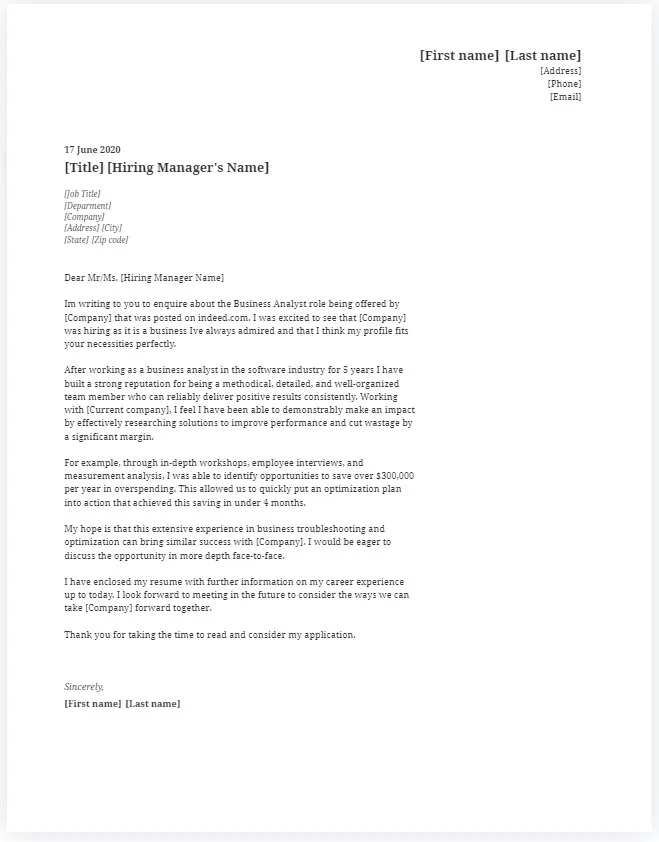
What is an Analyst Cover Letter
An analyst cover letter is a crucial document that accompanies your resume when applying for analyst positions. It serves as your initial introduction to a potential employer, providing an opportunity to showcase your personality, skills, and experience in a more narrative format than a resume allows. Unlike a resume, which lists your qualifications, a cover letter allows you to articulate why you are the perfect fit for the specific role and company. It allows you to provide context, elaborate on your accomplishments, and express your genuine interest in the opportunity. A well-crafted cover letter can significantly increase your chances of getting noticed and securing an interview, setting you apart from other applicants. Essentially, it’s your chance to make a strong first impression and convince the hiring manager to delve deeper into your qualifications. The cover letter should show the experience and skills that can benefit the company.
Why is an Analyst Cover Letter Important
The importance of an analyst cover letter cannot be overstated. It is more than just a formality; it is a strategic tool in your job search arsenal. In a competitive job market, a cover letter offers you the chance to distinguish yourself by highlighting relevant skills and experiences that align with the specific job requirements. It gives you the opportunity to tell your story, explaining why you are passionate about the field and the company. The cover letter provides an excellent platform to demonstrate your written communication skills, attention to detail, and understanding of the role. A strong cover letter showcases your research on the company and your knowledge of the industry, reflecting your genuine interest and proactive approach. Moreover, it helps the hiring manager quickly assess your suitability, ensuring that you are a good fit culturally and professionally, thereby increasing your chances of being called for an interview. Neglecting this important step might cause you to miss an opportunity. Cover letters help you show that you are fit for the company.
Key Components of a Strong Analyst Cover Letter

A successful analyst cover letter comprises several key components, each playing a vital role in conveying your qualifications and suitability for the role. From the opening to the closing, every section must work together seamlessly to present a compelling case for why you deserve an interview. Let’s dissect these critical elements and understand their significance in crafting a standout cover letter. Pay attention to each of these components to ensure your application will be considered. A successful cover letter is made of several key components.
Contact Information
Begin your cover letter with your contact information. This typically includes your full name, phone number, email address, and optionally, your LinkedIn profile URL. Ensure this information is accurate and up-to-date, as it is the primary way for the hiring manager to contact you. The contact information should be clear and easy to find, usually placed at the top of the letter. Formatting should be professional and consistent with the rest of the document, making it easy for the reader to reach out to you promptly. Also, use a professional email address, avoiding any informal or unprofessional handles that could detract from your application. Make sure you can be easily reached by the information you provide. All contact information should be readily available.
The Introduction
Your introduction is your first chance to capture the reader’s attention. It should be concise, engaging, and clearly state the purpose of your letter – to apply for the analyst position. Mention the specific role and where you found the job posting (e.g., company website, LinkedIn). Show your interest in the company, demonstrating you’ve done your homework. The introduction should briefly mention your key skills and why you are a good fit, creating a hook that encourages the reader to continue. The goal is to make a strong initial impression and entice the reader to learn more about your qualifications. Make your introduction count; it will set the tone for the entire letter and significantly influence the hiring manager’s initial perception of your candidacy. You should tell why you are the best fit for the company.
Highlighting Skills and Experience

The body of your cover letter should showcase your relevant skills and experience, aligning them with the job requirements. Focus on the key skills the employer is seeking. Provide specific examples of how you’ve used those skills in previous roles or projects. Quantify your achievements whenever possible, using numbers and data to illustrate your impact. Tailor this section to match the job description, emphasizing the most relevant aspects of your background. Highlight your analytical abilities, attention to detail, problem-solving skills, and any technical proficiencies like Excel, SQL, or specific analytical software. This section is where you persuade the hiring manager that you possess the necessary qualifications and have a proven track record of success. Make sure the skills and experiences you present are relevant. Highlight your skills and your experience in detail.
Quantifiable Achievements
Include quantifiable achievements in your cover letter to demonstrate the impact you’ve made in previous roles. Instead of simply stating your responsibilities, use numbers and data to illustrate your successes. For example, if you improved efficiency, state the percentage of improvement. If you saved the company money, specify the amount. If you increased sales, provide the percentage increase. Use metrics to showcase the results of your actions, making your achievements more concrete and impressive. These quantifiable results highlight the tangible value you bring to a company, helping you stand out from other applicants. Use the language from the job description to highlight achievements. This makes your application more compelling and helps the hiring manager envision your potential contributions. Consider that the hiring manager may have a lot of resumes to read; keep your points short and impactful. Quantify your achievements to show your contribution.
Demonstrating Company Knowledge
Demonstrate your knowledge of the company to show that you’re genuinely interested in the position and have researched the organization. Mention specific projects, initiatives, or values that resonate with you. This indicates a proactive approach and that you’ve taken the time to understand the company’s mission and culture. Mention specific areas of the company’s work that interest you, tying your skills and experience to its goals. This level of understanding demonstrates your commitment and increases your chances of standing out. Researching the company will also give you talking points for an interview. Showing you’ve taken the time to learn about the company will create a favorable impression and set your application apart from generic cover letters. Showing your knowledge of the company will set you apart from the rest.
Expressing Enthusiasm and Interest

Expressing enthusiasm and genuine interest is crucial for leaving a positive impression. Use words that convey your excitement about the opportunity and the company. Explain what particularly appeals to you about the role, its responsibilities, and the organization’s culture. Highlight how your career goals align with the company’s mission and vision. Show passion for the work and a strong desire to contribute to the team’s success. This enthusiasm can make you a more memorable candidate and demonstrates that you’re not just seeking a job, but a career. Show you are eager to contribute to the team and the organization. This genuine interest can differentiate you from other applicants. Show your enthusiasm to the company to make a good first impression.
Call to Action and Closing
Conclude your cover letter with a clear call to action and a professional closing. Reiterate your interest in the position and express your eagerness to discuss your qualifications further in an interview. Thank the hiring manager for their time and consideration. Include a polite and professional closing phrase, such as “Sincerely” or “Best regards,” followed by your full name. Ensure your closing leaves a lasting positive impression, emphasizing your confidence and enthusiasm. Provide your contact information again, making it easy for the hiring manager to reach you. This is your final opportunity to reinforce your interest and leave a positive and professional impression. A good call to action and closing are very important.
Cover Letter Examples for Specific Analyst Roles
Different analyst roles have unique requirements and focus areas. Tailoring your cover letter to the specific type of analyst position you’re applying for is essential. Here are some examples demonstrating how to customize your cover letter for financial, data, and business analyst roles. Adapting these examples will help you highlight the most relevant skills and experiences. Pay close attention to the terminology and skills emphasized in each example to customize your application. Examples for each analyst type should be included in your application.
Financial Analyst Cover Letter Example

When applying for a financial analyst position, emphasize your financial modeling, budgeting, forecasting, and investment analysis skills. Highlight your experience with financial statements, such as income statements, balance sheets, and cash flow statements. Mention any relevant certifications like CFA or CFP. Showcase your ability to analyze financial data, identify trends, and make recommendations. If you have experience with financial software like Bloomberg or FactSet, be sure to include it. Quantify your achievements in terms of cost savings, revenue generation, or investment returns. Show your understanding of financial markets and your ability to provide insightful financial advice. For example, describe how you conducted market research and investment analysis, resulting in an improved investment portfolio. Demonstrate your solid grasp of financial principles and your analytical abilities. Adapt the cover letter to fit your needs.
Data Analyst Cover Letter Example
For a data analyst position, highlight your proficiency in data analysis, data visualization, and statistical analysis. Emphasize your skills with programming languages like Python or R, and your experience with data analysis tools like SQL, Tableau, or Power BI. Showcase your ability to collect, clean, and analyze large datasets. Describe projects where you identified insights, created dashboards, and communicated findings to stakeholders. Mention your experience with data mining, machine learning, or predictive analytics if relevant. Quantify your impact by showcasing how you used data to improve decision-making, increase efficiency, or drive business growth. For example, you can describe how you used data analysis to identify areas for cost reduction or improve sales performance. This data analyst cover letter example should show your abilities. Make sure the template matches your experiences.
Business Analyst Cover Letter Example
In a business analyst cover letter, focus on your skills in business process analysis, requirements gathering, and stakeholder management. Highlight your experience with project management methodologies like Agile or Waterfall. Emphasize your ability to analyze business needs, identify solutions, and communicate them to both technical and non-technical audiences. Describe projects where you improved processes, streamlined workflows, or implemented new systems. Showcase your strong communication, problem-solving, and analytical skills. Demonstrate your ability to work collaboratively with cross-functional teams and manage projects effectively. For example, you can describe how you gathered requirements, designed solutions, and implemented a new system. This business analyst cover letter example should highlight your skills. Show off your business analyst skills.
Tips for Customizing Your Analyst Cover Letter

Customizing your analyst cover letter is critical to capturing the hiring manager’s attention and showcasing your suitability for the role. Generic cover letters often get overlooked. Tailoring your letter to each specific job application can significantly increase your chances of getting an interview. It allows you to address the specific needs of the employer. Here are key steps and tips to help you customize your cover letter effectively. Customizing your letter will help you get noticed.
Researching the Company
Thoroughly research the company and the specific role you’re applying for. Visit their website, read their “About Us” section, and explore their recent news and projects. Understand the company’s mission, values, and culture. Look at their social media profiles and industry publications to understand their market position and goals. Tailor your cover letter to show you understand their business. Identify the key requirements, skills, and experiences mentioned in the job description. Researching the company will allow you to tailor your cover letter and make your application more relevant and impactful. Understanding the company will create a positive impression. Understanding the company’s mission is essential.
Tailoring to the Job Description
Carefully analyze the job description to identify the key requirements, skills, and experiences the employer is seeking. Use keywords and phrases from the job description throughout your cover letter to directly address their needs. Customize your cover letter by aligning your skills and experience with the job’s specific requirements. Provide examples that showcase how your qualifications match what the company is looking for. This tailored approach demonstrates that you have carefully read the job description and understand the role. By addressing the job description directly, you show that you possess the relevant qualifications. This targeted approach significantly increases your chances of being selected for an interview. Make sure your skills match the job requirements.
Proofreading and Editing

Proofread and edit your cover letter meticulously to eliminate errors in grammar, spelling, and punctuation. Errors can create a negative impression and undermine your credibility. After writing, take a break and then review your cover letter with fresh eyes. Use spell-check and grammar-check tools, but also read the letter carefully to ensure the language flows naturally. Consider having a friend or colleague review your cover letter to catch any mistakes you might have missed. Ensure your letter is clear, concise, and professional. Proofreading and editing show attention to detail and professionalism. Make sure you’ve provided a polished and error-free document that represents your best work. It can make the difference in your success. Proofread your cover letter for any errors.
Common Mistakes to Avoid
Certain mistakes can significantly undermine your cover letter and reduce your chances of securing an interview. Being aware of these common errors will help you avoid them and present a polished and professional application. Here are some mistakes to steer clear of when crafting your analyst cover letter. Avoid these mistakes to create a positive impression.
Generic Cover Letters
Avoid sending generic cover letters that are not tailored to the specific job and company. Generic letters often lack the personalization needed to capture the hiring manager’s attention. They fail to demonstrate that you’ve researched the company or understand the role’s requirements. Instead of recycling a generic template, customize each cover letter to reflect the specific job description and the company’s values. Highlight your skills, experiences, and achievements relevant to the position. This approach demonstrates genuine interest and increases your chances of making a favorable impression. Use the job description and do your research to create a unique cover letter that stands out. Make sure you create a unique cover letter.
Typos and Grammatical Errors

Typos and grammatical errors are a major turnoff for hiring managers. These errors can detract from your professionalism and attention to detail. Before submitting your cover letter, meticulously proofread it to catch any mistakes in spelling, grammar, and punctuation. Use spell-check and grammar-check tools, but also read through the letter carefully. Consider asking a friend or colleague to review it for you. A polished, error-free cover letter reflects your commitment to quality. Proofreading will help create a positive impression and increase your chances of getting an interview. Be meticulous in your proofreading to ensure the highest standard of professionalism. No typos should be included.
Lack of Enthusiasm
A lack of enthusiasm in your cover letter can be a major disadvantage. Without enthusiasm, you come across as uninterested or uninspired. Use positive and engaging language to express your excitement about the opportunity. Show your passion for the field and the company. Describe how your career goals align with their mission and vision. Tailor your enthusiasm to match the specific requirements of the role. This demonstrates that you are genuinely interested in the position and not just looking for a job. Showing genuine enthusiasm makes you more memorable and increases your chances of getting an interview. Use language and keywords that demonstrate your enthusiasm. Show your enthusiasm.
Using a Cover Letter Template
Cover letter templates can be a helpful starting point, but it’s essential to customize them to match your qualifications and the specific job. While templates can provide a basic structure, you should adapt the content to showcase your unique skills and experiences. Avoid using a generic template without modifications, as it might not highlight your suitability for the role. Customize the template by adding details about your skills, accomplishments, and enthusiasm for the company. This level of personalization demonstrates that you understand the role and are a good fit. Make use of a template, but make sure you create a custom document. Make sure you tailor the template to fit the company.
Where to Find Cover Letter Templates
You can find cover letter templates on various websites and platforms. Many job search websites, like Indeed and LinkedIn, offer free templates. You can also find templates on professional resume-writing websites. Microsoft Word also provides a variety of customizable templates. When choosing a template, select one that matches the style and format appropriate for your industry and the specific role. Make sure you tailor the template to align with your qualifications, experience, and the requirements of the job description. While templates can be a helpful resource, always remember to personalize them to ensure they reflect your unique skills and achievements. Finding the right template can save you some time. Use different sites to find the perfect template.