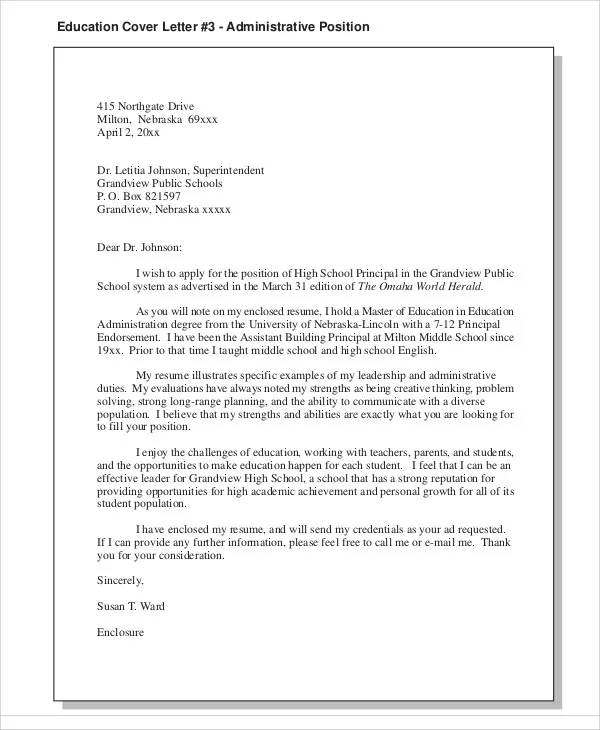
Understanding the Purpose of an Administrative Position Cover Letter
An administrative position cover letter is a crucial document in your job application. It serves as your introduction to the hiring manager, providing an opportunity to showcase your skills, experience, and personality. Unlike a resume, which presents a factual summary of your qualifications, a cover letter allows you to elaborate on your achievements, explain your career goals, and express your enthusiasm for the specific role and company. Its primary purpose is to persuade the hiring manager to read your resume and consider you for an interview. A well-crafted cover letter can significantly increase your chances of landing an interview, while a poorly written one can lead to your application being overlooked. The cover letter allows you to demonstrate your communication skills and attention to detail, both of which are highly valued in administrative roles.
Key Components to Include in Your Cover Letter
Several key components must be included in your administrative position cover letter to make it effective. These elements work together to create a compelling narrative that highlights your suitability for the role. The inclusion of each of these parts demonstrates your attention to detail and professionalism, increasing your likelihood of advancing to the next stage of the hiring process. Each section should be concise and focused, providing relevant information that supports your application. By addressing each of these points, you present a well-rounded and compelling case for why you are the ideal candidate for the administrative position.
Contact Information and Addressing the Hiring Manager

Start your cover letter by including your contact information (name, address, phone number, and email address) at the top. Then, address the hiring manager by name, if possible. Research the company to find the correct contact person, as addressing the letter to a specific individual demonstrates your initiative and attention to detail. If you are unable to find the hiring manager’s name, use a professional greeting like “Dear Hiring Manager”. Avoid generic greetings such as “To Whom It May Concern.” This personal touch can significantly impact the hiring manager and show that you are genuinely interested in the position and have done your homework on the company and position.
Highlighting Your Skills and Experience
The body of your cover letter should focus on highlighting your relevant skills and experience. Identify the key requirements outlined in the job description and then provide specific examples of how you have demonstrated those skills in previous roles. Use action verbs to describe your accomplishments and quantify your results whenever possible. For instance, instead of saying “Managed office tasks,” you could say “Streamlined office procedures, resulting in a 15% increase in efficiency.” This approach gives the hiring manager a clear picture of your capabilities and value. This section is where you convince the hiring manager that you possess the necessary skills and experience.
Showcasing Relevant Administrative Skills
Emphasize skills such as organization, time management, communication (both written and verbal), problem-solving, and proficiency with relevant software (Microsoft Office, etc.). Provide examples of how you have utilized these skills to achieve positive outcomes in previous roles. Administrative positions require a high level of organization, so showcase your abilities in managing multiple tasks, prioritizing deadlines, and maintaining an organized work environment. By highlighting these skills, you demonstrate your suitability for the role and your capacity to excel in a demanding administrative setting. Remember to align your showcased skills with the requirements of the specific job.
Demonstrating Accomplishments and Quantifiable Results

Whenever possible, quantify your accomplishments. This helps the hiring manager understand the impact you have had in previous roles. For instance, rather than saying “Improved customer service,” you could state, “Improved customer satisfaction scores by 20% through implementation of new communication protocols.” Use numbers to illustrate your achievements, such as the number of projects completed, the amount of money saved, or the number of clients served. Quantifiable results provide concrete evidence of your abilities and value, setting you apart from other candidates. This level of detail demonstrates your competence and gives the hiring manager a clear understanding of your value.
Tailoring Your Cover Letter to the Specific Job
Customize your cover letter for each administrative position you apply for. Generic cover letters are easily identified and often lead to rejection. Carefully read the job description and identify the key requirements and qualifications. Then, tailor your cover letter to address those specific needs. Highlight the skills and experience that align with the job requirements and explain how you can contribute to the company’s success. This demonstrates your genuine interest in the position and your understanding of the role’s responsibilities. Personalization is critical, as it shows you’ve taken the time to understand the specific needs of the employer.
Researching the Company and the Role
Before writing your cover letter, research the company and the specific role. Visit the company’s website, read news articles, and check their social media profiles to gain insights into their mission, values, and culture. This information will help you tailor your cover letter and demonstrate your understanding of the company’s needs. Understanding the company’s goals allows you to show how your skills and experience align with their objectives. Tailoring your letter in this way shows that you’re genuinely interested in the position and have taken the initiative to learn more about the company.
Structuring Your Cover Letter for Maximum Impact

A well-structured cover letter is easy to read and effectively conveys your key qualifications. The structure of your cover letter can influence how the hiring manager perceives your application. A clear and logical structure makes your letter easier to read and ensures that the hiring manager quickly grasps your key qualifications. The structure should include an opening paragraph, body paragraphs, and a closing paragraph. Following this structure helps you present your qualifications effectively and make a lasting impression. Properly structuring your letter greatly improves your chance of being considered for an interview.
Crafting a Compelling Opening Paragraph
The opening paragraph is your first opportunity to make a positive impression. State the position you are applying for and briefly explain why you are interested in the role and the company. You can also mention how you found the job opening. Make sure to immediately grab the hiring manager’s attention by highlighting your most relevant qualification or a key achievement that aligns with the job requirements. A strong opening paragraph sets the tone for your entire cover letter and encourages the hiring manager to read further. It should be concise and engaging, demonstrating your enthusiasm and providing an immediate reason for the reader to continue.
Developing Strong Body Paragraphs
The body paragraphs should provide detailed examples of your skills and experience. Each paragraph should focus on a specific skill or achievement and demonstrate how you have used it to achieve positive results. Use the STAR method (Situation, Task, Action, Result) to structure your examples, providing context, outlining the tasks you completed, describing your actions, and quantifying the results. This method helps you create a compelling narrative that showcases your abilities and value. Ensure the body paragraphs are well-organized, with each paragraph addressing a specific point and supporting your overall suitability for the position. Using strong action verbs adds more impact to your writing.
Writing a Powerful Closing Paragraph

Your closing paragraph should reiterate your interest in the position and thank the hiring manager for their time and consideration. Express your eagerness to learn more about the opportunity and to discuss your qualifications in an interview. Include a call to action, such as stating that you look forward to hearing from them soon. You can also include your contact information once more. A strong closing paragraph leaves a positive final impression and reinforces your enthusiasm for the role. The closing paragraph is your last chance to make a strong positive impression.
Formatting Your Cover Letter Professionally
Professional formatting is essential to create a polished and professional cover letter. Ensure your cover letter is easy to read and visually appealing. Proper formatting demonstrates your attention to detail and professionalism, both of which are crucial for administrative roles. Use appropriate fonts, spacing, and margins to create a clean and organized document. Formatting ensures that the hiring manager has an easy and pleasant experience while reading your letter.
Choosing the Right Font and Layout
Choose a professional font such as Times New Roman, Arial, or Calibri, with a font size of 11 or 12 points. Use consistent spacing (single-spaced within paragraphs and double-spaced between paragraphs) and set standard margins (1 inch on all sides). The layout should be clean and uncluttered, making the document easy to read. A well-formatted cover letter shows respect for the reader and reflects your attention to detail. Avoid using overly stylized fonts or layouts, as these can distract from the content of your letter.
Proofreading and Editing Your Cover Letter

Thoroughly proofread and edit your cover letter before submitting it. Typos, grammatical errors, and inconsistencies can create a negative impression and undermine your credibility. Proofreading demonstrates your attention to detail and commitment to quality. Take the time to review your letter multiple times, paying close attention to spelling, grammar, punctuation, and sentence structure. Ask a friend, family member, or career counselor to review your cover letter as well, as a fresh pair of eyes can often catch errors you may have missed. A polished cover letter is a reflection of your professionalism.
Common Mistakes to Avoid in Your Cover Letter
Avoid common pitfalls that can damage your chances of getting hired. Awareness of these common errors will help you create a cover letter that effectively highlights your qualifications and skills. Pay close attention to the points discussed in this section to make your letter as strong as possible. Avoiding these mistakes will greatly improve your chances of success in the application process.
Generic Language and Lack of Specificity
Avoid using generic language that could apply to any job. Instead, tailor your cover letter to the specific position and highlight the skills and experiences that align with the job requirements. Generic language makes your cover letter sound impersonal and shows a lack of genuine interest in the role. Use specific examples and quantifiable results to demonstrate your achievements and value. Customization is a must; demonstrate that you understand the role and the company’s needs.
Typos and Grammatical Errors

Typos and grammatical errors can undermine your credibility and suggest a lack of attention to detail. Always proofread your cover letter carefully before submitting it. Run a spell checker and grammar checker, but also read through the document multiple times to catch any errors that the automated tools may miss. Ask a friend or family member to review your letter as well. Proofreading is a non-negotiable step in the job application process. Errors reflect poorly on your communication skills.
Using a Template Uncritically
While using a template can be a helpful starting point, do not rely on it uncritically. Customize the template to fit your specific skills, experience, and the requirements of the job. Ensure that the content is relevant and personalized. Generic templates often fail to highlight your unique qualifications and can make your application appear impersonal. Using a template is fine as a starting point, but it’s crucial to personalize it to demonstrate your individual qualifications and abilities.
Best Practices for Administrative Position Cover Letters
Following best practices helps you create a cover letter that effectively presents your qualifications. Implementing these strategies will help you stand out and increase your chances of getting an interview. Applying these best practices is an essential way to improve the effectiveness of your job application. Following these best practices will give you an advantage in the application process.
Emphasizing Your Organizational Skills

Administrative positions require excellent organizational skills. In your cover letter, provide specific examples of how you have demonstrated your ability to manage tasks, prioritize deadlines, and maintain an organized work environment. Use action verbs to showcase your organizational abilities, such as “Organized,” “Managed,” “Coordinated,” and “Streamlined.” Showcasing your ability to maintain order and efficiency is a key asset. Your organizational skills are central to success in administrative roles; demonstrate them effectively.
Highlighting Your Communication Skills
Communication skills are crucial in administrative roles. Highlight your ability to communicate clearly and effectively, both in writing and verbally. Mention your experience with emails, phone calls, and written correspondence. Provide examples of how you have used your communication skills to build relationships, resolve conflicts, and convey information accurately. Demonstrating effective communication is a key asset for administrative roles. Showcasing your ability to interact with people is a critical component of your success.
Demonstrating Your Proficiency with Software and Technology
Administrative roles often involve using various software and technologies. In your cover letter, mention your proficiency with relevant software and systems, such as Microsoft Office, Google Suite, CRM systems, and any other tools that are relevant to the job description. Provide specific examples of how you have used these technologies to improve efficiency, streamline processes, or achieve specific goals. Proficiency in relevant software and technology is often a requirement; demonstrate your skills to convince employers.
Providing Action Verbs and Strong Language
Use action verbs and strong language throughout your cover letter to make your accomplishments and skills more impactful. Action verbs make your writing more dynamic and engaging. Use a thesaurus to find synonyms for common words and phrases. Avoid passive voice and use active voice to clearly communicate your actions and results. Using active verbs conveys your abilities in a clear and persuasive manner.
Examples of Effective Cover Letter Phrases
Using compelling phrases can make your cover letter more persuasive. “I am proficient in…” or “I have experience in…” are good starting points. Instead, use phrases like “Successfully managed,” “Streamlined processes resulting in,” or “Improved efficiency by.” Tailor these phrases to the specific requirements of the job description to further increase the impact. Using phrases in your cover letter can show the hiring manager that you are the best candidate for the job. Using precise phrases shows a focus on achieving results.