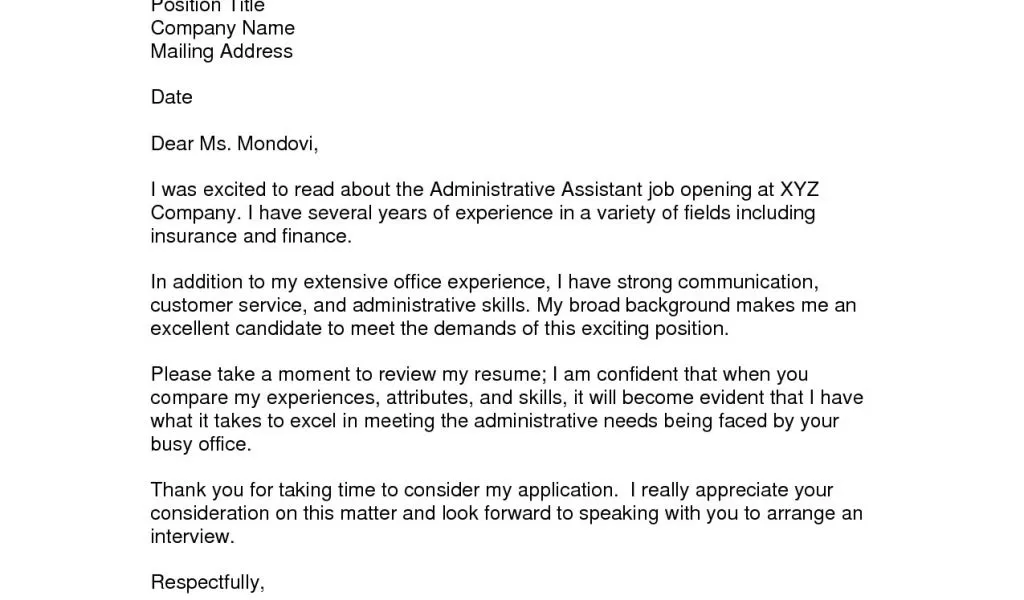
What is an Administrative Cover Letter
An administrative cover letter is a crucial document that accompanies your resume when applying for administrative positions. It serves as your introduction to a potential employer, providing a concise overview of your skills, experience, and qualifications. Unlike a resume, which lists your work history and accomplishments, a cover letter allows you to explain why you are the ideal candidate and how your abilities align with the specific requirements of the job. It’s your opportunity to showcase your personality, communication skills, and enthusiasm for the role. A well-crafted cover letter can significantly increase your chances of securing an interview, making it a vital part of your job application strategy. Mastering the art of writing effective cover letters is essential for success in the competitive field of administrative jobs.
The Purpose of an Administrative Cover Letter
The primary purpose of an administrative cover letter is to persuade the hiring manager to read your resume and consider you for an interview. It’s your chance to make a strong first impression and distinguish yourself from other applicants. The cover letter should highlight your key skills and experiences that are most relevant to the job description. It also demonstrates your writing ability and attention to detail, both of which are essential in administrative roles. A compelling cover letter showcases your understanding of the company’s needs and your commitment to contributing to their success. By effectively communicating your value proposition, you can significantly increase your chances of landing an interview and ultimately, the job. Remember, a generic cover letter will likely be overlooked, so personalization is key.
Key Elements of a Winning Cover Letter

A winning administrative cover letter comprises several key elements that work together to make a strong impression. These elements include a well-structured format, a compelling introduction, a focused body, and a confident closing. The letter should clearly state the position you’re applying for and where you found the job posting. The body paragraphs should highlight your relevant skills and experiences, providing specific examples of your accomplishments. It’s important to tailor each letter to the specific job and company, showcasing your understanding of their needs and how you can contribute to their goals. Conclude by expressing your enthusiasm for the role and including a clear call to action, such as requesting an interview. Proper formatting, including appropriate fonts and spacing, is also essential for readability and professionalism. Refer to the image [winning-cover-letter.webp] for inspiration!
Formatting and Structure
The structure of your administrative cover letter is just as important as its content. A well-formatted letter is easy to read and presents your information in a clear and organized manner. Use a professional font like Times New Roman, Arial, or Calibri, and maintain a consistent font size (usually 11 or 12 points). Ensure there is adequate spacing between paragraphs and sections to improve readability. Your letter should generally be no more than one page in length. The standard format includes a header, a salutation, an introduction, body paragraphs highlighting your skills and experience, a closing paragraph, and a call to action. Proper formatting not only enhances readability but also reflects your attention to detail and professionalism, qualities highly valued in administrative roles.
Header
Your cover letter’s header should include your contact information, such as your name, phone number, email address, and optionally, your LinkedIn profile URL. The header should align with the left or right side of the page and should be clean and uncluttered. The date of the letter should also be included. This information allows the hiring manager to easily contact you. It is critical to ensure that the contact details are accurate and up-to-date. Maintaining a professional header is essential for making a positive first impression. An example is given in [cover-letter-header.webp].
Salutation

The salutation is the greeting at the beginning of your cover letter. Ideally, you should address the hiring manager by name. Research the company to find the name of the person responsible for hiring or the specific hiring manager for the position. If you cannot find a specific name, use a professional greeting such as “Dear Hiring Manager” or “Dear [Department Name] Team.” Avoid generic greetings like “To Whom It May Concern.” A personalized salutation shows that you’ve taken the time to research the company and the role, which can make a positive impression. The salutation sets the tone for the rest of the letter, so choosing the right one is crucial.
Body Paragraph 1 Introduction
The introduction should immediately capture the reader’s attention and state the purpose of your letter. Start by mentioning the specific position you are applying for and where you found the job posting. Briefly state why you are interested in the role and the company. You can also include a brief overview of your key qualifications or a standout achievement that aligns with the job requirements. The goal is to create an initial positive impression and encourage the reader to continue reading. Avoid clichés and aim for a concise and engaging introduction that highlights your enthusiasm and suitability for the role. Make the introduction strong so as to capture the attention of the hiring manager.
Body Paragraph 2 Highlight Skills
In the second paragraph, focus on highlighting the key skills most relevant to the administrative position. Review the job description and identify the skills that the employer is seeking, such as communication, organizational skills, attention to detail, proficiency in specific software (e.g., Microsoft Office), and time management. Provide specific examples to demonstrate how you have successfully used these skills in previous roles. Quantify your achievements whenever possible. For example, instead of saying “managed office tasks,” say “managed office tasks efficiently, resulting in a 15% reduction in operational costs.” Use action verbs to describe your accomplishments and skills, and focus on how your skills align with the needs of the company. See image [highlight-skills.webp] for inspiration.
Body Paragraph 3 Showcase Experience

The third paragraph should showcase your relevant experience. Describe your past administrative roles, highlighting your responsibilities and accomplishments. Focus on the experiences that directly relate to the job you are applying for, such as managing calendars, coordinating meetings, handling correspondence, or assisting with budgets. Quantify your achievements whenever possible. Use the STAR method (Situation, Task, Action, Result) to describe specific situations where you demonstrated your skills and achieved positive outcomes. For example, “In my previous role, I was tasked with streamlining the filing system. To address this, I implemented a new digital filing system, which decreased document retrieval time by 20%.” The goal is to prove that you have the skills and experience required to excel in the new role. View image [showcase-experience.webp].
Body Paragraph 4 Demonstrate Enthusiasm
The fourth paragraph should convey your enthusiasm for the role and the company. Explain why you are interested in the specific position and what motivates you to apply. Show that you have researched the company and understand its mission, values, and goals. Mention specific aspects of the company or the role that appeal to you. Express your excitement about the opportunity to contribute to the company’s success and highlight your willingness to learn and grow. Make your enthusiasm genuine and authentic, and demonstrate your commitment to the role. Showing your genuine interest can set you apart from other candidates.
Closing and Call to Action
The closing paragraph should summarize your interest in the role and reiterate your qualifications. Thank the hiring manager for their time and consideration. Include a clear call to action, such as expressing your availability for an interview and providing your contact information. You can also express your eagerness to discuss how your skills and experience can benefit the company. Avoid using generic phrases and make sure your closing is both professional and engaging. Ending with a strong call to action increases the chances of securing an interview. A well-crafted closing leaves a positive impression on the hiring manager.
Dos and Don’ts for Administrative Cover Letters

Writing a successful cover letter requires careful attention to detail. Knowing what to do and what to avoid can significantly increase your chances of success. Adhering to best practices will help you create a compelling letter that attracts the attention of hiring managers. Below are some essential dos and don’ts to guide you in crafting an effective administrative cover letter.
Do Highlight Relevant Skills and Experience
Always tailor your cover letter to emphasize the skills and experiences most relevant to the administrative position. Review the job description carefully and identify the key requirements. Then, highlight your achievements that align with those requirements. Provide specific examples to demonstrate how you have used these skills effectively in the past. Quantify your accomplishments whenever possible, using numbers and metrics to showcase the impact you have made. This approach proves to the hiring manager that you possess the abilities they are seeking and that you can deliver results. Highlighting relevant skills and experience is crucial for making a strong impression and standing out from other candidates.
Do Tailor Your Letter to the Specific Job
Each cover letter should be customized to the specific job and the company. Avoid using generic templates that can make your application appear impersonal. Research the company’s mission, values, and goals to show that you understand their needs. Use keywords from the job description to demonstrate that you meet the required qualifications. Tailoring your letter shows that you have taken the time to understand the role and are genuinely interested in the opportunity. It increases your chances of making a positive impression on the hiring manager and helps you stand out from the competition. Customization will make your letter more impactful.
Do Proofread Carefully

Proofreading your cover letter is essential to ensure that it is free of errors. Typos, grammatical mistakes, and formatting errors can undermine your professionalism and credibility. Carefully review your letter for any spelling errors, punctuation mistakes, or inconsistencies in formatting. It’s best to read your letter aloud to catch any awkward phrasing or grammatical issues. Also, ask someone else to review your letter for a fresh perspective. [proofread-cover-letter.webp] Proofreading not only demonstrates your attention to detail but also reflects your ability to communicate effectively, which is essential in administrative roles. Thorough proofreading can make the difference between securing an interview and being overlooked.
Don’t Use Generic Templates
Avoid using generic cover letter templates that are easily recognizable and lack personalization. Using a generic template can make your application appear impersonal and demonstrate a lack of effort. Hiring managers can easily spot generic templates, which can make your application less effective. Instead, customize each cover letter to the specific job and the company. Show that you have taken the time to understand the role and are genuinely interested in the opportunity. Customize your letter to the specific needs of the job. Highlighting relevant skills and experiences will help you stand out.
Don’t Exceed One Page
Keep your cover letter concise and to the point. Do not exceed one page in length. Hiring managers are often busy and may not have time to read lengthy cover letters. Focus on the most relevant information and present it clearly and concisely. Use a professional font, proper spacing, and clear formatting to enhance readability. By keeping your letter to one page, you demonstrate respect for the hiring manager’s time and ensure that they can easily grasp your key qualifications and interest in the role. Conciseness and clarity are key to making a strong impression.
Don’t Focus Solely on Responsibilities

While it’s important to mention your previous responsibilities, don’t focus solely on listing what you did in past roles. Hiring managers are more interested in your accomplishments and the value you brought to your previous employers. Provide specific examples of how you used your skills to achieve positive results. Quantify your achievements whenever possible. Use action verbs to describe your accomplishments. Show that you are results-oriented. By showcasing your accomplishments, you can demonstrate your ability to perform effectively in the new role and increase your chances of getting an interview.
Examples of Strong Administrative Cover Letters
To illustrate the key elements of an effective administrative cover letter, here are examples of strong letters tailored for different administrative positions. These examples demonstrate how to highlight relevant skills, tailor your letter to the job, and showcase your accomplishments. Examine these examples closely to get ideas for structuring your own cover letters and to help you win.
Example 1 Cover Letter for Office Manager
In the office manager cover letter [office-manager-cover-letter.webp], the applicant highlights experience with office operations, vendor management, and team leadership. The introduction immediately states the position applied for, and where the job was found. Skills and experience are highlighted by giving specific examples of how the applicant improved office efficiency and reduced costs. The closing paragraph expresses enthusiasm for the company’s mission and a desire to contribute to its success. Strong emphasis is placed on organizational skills and management, which are crucial for this role.
Example 2 Cover Letter for Administrative Assistant

The administrative assistant cover letter demonstrates the ability to handle multiple tasks, manage schedules, and provide excellent customer service. The introduction quickly states the role sought, and briefly summarizes the main skills. The applicant showcases experience with scheduling, communication, and record-keeping, providing specific examples of how they improved office efficiency and supported a team. Emphasis is placed on the organization and customer service skills that are critical for this type of role.
Example 3 Cover Letter for Executive Assistant
The executive assistant cover letter highlights experience supporting high-level executives, managing calendars, and handling confidential information [executive-assistant-cover-letter.webp]. The introduction is short and clearly states the specific position applied for and where the job was found. The letter focuses on the applicant’s skills in communication, organization, and project management, along with an ability to thrive in a fast-paced environment. Examples illustrate experience with travel arrangements, meeting coordination, and confidential correspondence. The closing reiterates enthusiasm for the opportunity and a strong commitment to the organization. These are all key for this kind of administrative role.
Tips for Customizing Cover Letters
Customizing your cover letter is key to making a strong impression on potential employers. It shows that you have taken the time to understand the specific requirements of the role and that you are genuinely interested in the opportunity. This demonstrates to the hiring manager that you care.
Research the Company and the Role
Before you begin writing, research the company and the specific role you are applying for. Visit the company’s website and read the job description carefully. Understand the company’s mission, values, and culture. Identify the key skills and experiences that the employer is seeking. Look for information about the hiring manager and any recent company news. This research allows you to tailor your cover letter and demonstrate that you are a good fit for the company and the role. A good understanding of the company’s needs allows you to show you can contribute.
Use Keywords from the Job Description
Carefully review the job description and identify the keywords and phrases that the employer uses to describe the required skills and experience. Incorporate these keywords into your cover letter in a natural and relevant way. This helps the hiring manager quickly see that you possess the qualifications they are seeking. It will also improve the chances of your cover letter passing through applicant tracking systems (ATS). Using the job description keywords is one of the most critical steps.
Showcase Accomplishments with Numbers
Whenever possible, quantify your achievements by using numbers and metrics. For example, instead of saying, “Improved efficiency,” say “Improved office efficiency by 20% through the implementation of a new filing system.” Using numbers adds credibility to your claims and provides concrete evidence of your abilities. Metrics also make your accomplishments more impactful and memorable. Provide specific results to demonstrate your value to a potential employer. By providing numbers, the hiring manager can easily see your value.
Common Mistakes to Avoid
Avoid these common mistakes to ensure that your cover letter makes a positive impression and increases your chances of securing an interview. Pay attention to these aspects of writing your cover letter.
Typos and Grammatical Errors
Typos and grammatical errors are a major turnoff for hiring managers. They can indicate a lack of attention to detail and a lack of professionalism. Proofread your cover letter carefully to catch any spelling mistakes, punctuation errors, or grammatical issues. Read your letter aloud or have someone else review it for a fresh perspective. Using spell-check software is a good start, but it’s not always enough to catch all errors. Take the time to thoroughly review your cover letter before submitting it. This will ensure that you make a strong impression.
Lack of Personalization
Avoid using a generic cover letter that is not tailored to the specific job or company. A lack of personalization shows that you have not put in the effort to understand the role and the organization’s needs. Address the hiring manager by name, if possible. Demonstrate that you have researched the company and understand its mission, values, and goals. Customize your letter to highlight your relevant skills and experience. Show genuine interest in the opportunity. A personalized cover letter can help you make a positive impression.
Being Vague and Generic
Avoid using vague and generic language that does not provide concrete examples or specific details. Provide specific details about your accomplishments and how you have used your skills in the past. Quantify your achievements whenever possible. Provide strong examples to show how you are a great fit for the job. Do not rely on clichés and generic phrases. Instead, use clear, concise, and specific language to describe your qualifications and your value to the potential employer. Provide unique details to distinguish yourself.
Conclusion
Writing a winning administrative cover letter requires careful attention to detail, strategic planning, and a clear understanding of the role and the company. By following these guidelines and utilizing the provided examples, you can create a compelling cover letter that showcases your skills, experience, and enthusiasm. Remember to customize each cover letter to the specific job, highlight your accomplishments, and proofread carefully. A well-crafted cover letter is a crucial tool in your job search. It can significantly increase your chances of securing an interview and ultimately, landing your dream administrative job.