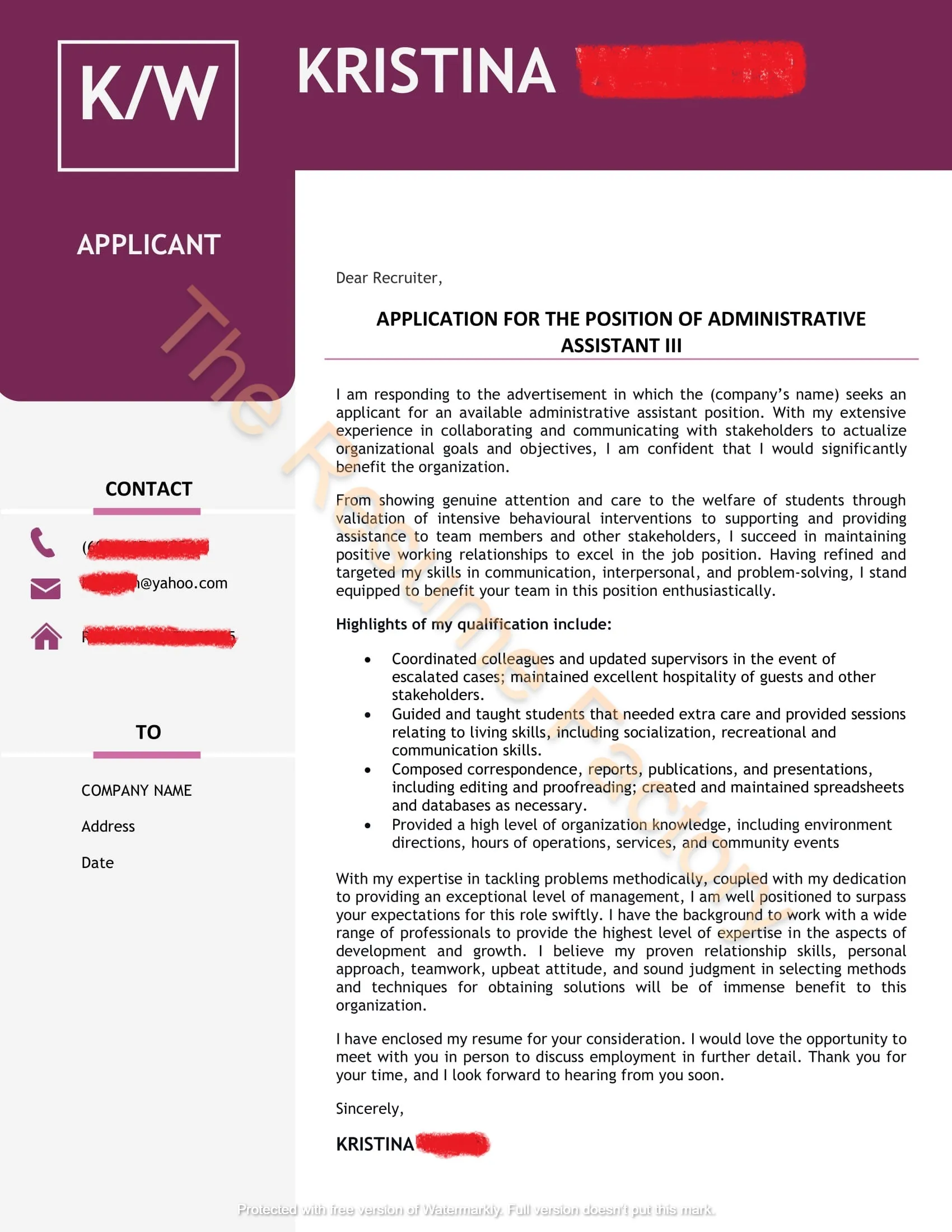
Crafting Your Administrative Assistant Cover Letter
A well-crafted cover letter is your first opportunity to make a strong impression on a potential employer. For an Administrative Assistant role, your cover letter is not just a formality; it’s a crucial tool that showcases your organizational skills, attention to detail, and communication abilities. This guide will walk you through the essential steps to create a compelling cover letter that highlights your qualifications and increases your chances of landing an interview. By following these guidelines, you can create a cover letter that resonates with hiring managers and effectively conveys your suitability for the position.
Understanding the Purpose of a Cover Letter
The primary purpose of an administrative assistant cover letter is to introduce yourself and express your interest in a specific job. Unlike a resume, which provides a detailed overview of your experience and skills, the cover letter allows you to personalize your application. It’s your chance to explain why you’re interested in the role, how your skills and experiences align with the job requirements, and what makes you a unique candidate. A strong cover letter helps you stand out from other applicants by demonstrating your personality, writing skills, and genuine enthusiasm for the opportunity.
Key Components of an Administrative Assistant Cover Letter

A well-structured cover letter includes several key components that work together to present a cohesive and compelling argument for your candidacy. Each section serves a specific purpose and contributes to the overall effectiveness of your letter. Understanding these components and how to use them effectively is essential for crafting a cover letter that captures the attention of hiring managers and makes a positive impact.
Contact Information
At the top of your cover letter, include your contact information. This should include your full name, phone number, email address, and optionally, your LinkedIn profile URL. Ensure that your email address is professional-sounding and that your phone number is active and monitored regularly. This section ensures that the hiring manager can easily reach you.
Date and Recipient Information
Following your contact information, include the date and the recipient’s details. If possible, address the letter to a specific person (e.g., the hiring manager). Research the company website or LinkedIn to find the name and title of the hiring manager. Use the correct title and spell the name accurately. If you cannot find a specific name, use a general greeting such as “Dear Hiring Manager.”
The Opening Paragraph

The opening paragraph is your chance to grab the reader’s attention. Start by stating the position you’re applying for and where you saw the job posting. Briefly express your interest in the role and the company. Make a strong, concise statement about why you are a good fit. For example, “I am writing to express my enthusiastic interest in the Administrative Assistant position at [Company Name], as advertised on [Platform]. With my proven organizational skills and commitment to providing exceptional administrative support, I am confident I can significantly contribute to your team.”
Highlighting Your Skills and Experience
This is the main body of your cover letter, where you showcase your relevant skills and experience. Focus on the requirements listed in the job description and align your skills with them. Provide specific examples that demonstrate your abilities. Avoid simply restating your resume; instead, expand on your experiences and highlight the results you achieved. Use action verbs to describe your accomplishments and quantify your achievements whenever possible.
Showcasing Relevant Skills
Identify the key skills required for the administrative assistant position, such as organizational skills, communication skills (written and verbal), proficiency in office software (e.g., Microsoft Office Suite), time management, and attention to detail. Provide examples of how you’ve used these skills in previous roles. For example, “In my previous role at [Previous Company], I streamlined the office’s filing system, reducing document retrieval time by 25%.” Tailor your skills to match the job description and use keywords from the job posting.
Quantifying Accomplishments

Whenever possible, quantify your accomplishments to demonstrate the impact of your work. Use numbers, percentages, or specific results to highlight your achievements. For instance, instead of saying “Managed schedules,” say “Managed schedules for a team of 10, ensuring 100% meeting attendance.” Quantifying your accomplishments adds credibility and makes your cover letter more impactful. Use metrics to showcase your ability to make a positive impact.
Demonstrating Soft Skills
Administrative roles require strong soft skills such as communication, problem-solving, and teamwork. Provide examples of how you’ve demonstrated these skills in your previous roles. For example, “Successfully resolved customer inquiries, resulting in a 95% satisfaction rate.” Or, “Collaborated with cross-functional teams to improve office efficiency.” Highlighting these skills shows your ability to work well with others and handle various situations effectively.
Addressing the Employer’s Needs
Demonstrate that you understand the employer’s needs by researching the company and tailoring your cover letter to their specific requirements. This shows that you’ve taken the initiative and are genuinely interested in the role. This includes making sure your writing has good grammar, spelling and no mistakes. Understanding their mission, values, and any recent projects or initiatives is important. Customizing your cover letter to each application shows initiative.
Researching the Company

Before writing your cover letter, research the company to understand its mission, values, and any recent news or projects. Use this information to tailor your cover letter, demonstrating that you understand the company’s needs and are interested in contributing to its goals. Visit the company’s website, read news articles, and check their social media profiles. Mentioning specific company initiatives or values in your letter shows your genuine interest.
Tailoring Your Letter
Customize your cover letter to each job application. Use keywords from the job description and highlight the skills and experiences that align with the specific requirements of the role. Avoid using a generic cover letter. Instead, personalize each letter to reflect your understanding of the company and the position. This demonstrates your attention to detail and your commitment to the application process.
The Closing Paragraph
The closing paragraph is your final opportunity to make a lasting impression. It should express your gratitude, reiterate your interest, and include a call to action. Make sure to include all relevant information in the closing to give the best chance of landing a interview. Ensure there are no mistakes in the closing as this may be your last impression.
Expressing Gratitude

Thank the hiring manager for considering your application. Express your appreciation for their time and attention. A simple statement such as “Thank you for considering my application” is a polite and professional way to show your gratitude. This helps to keep a positive tone throughout the entire letter and shows professionalism. This simple gesture can leave a good lasting impression.
Call to Action
Conclude your cover letter with a call to action, such as expressing your availability for an interview. State that you are eager to discuss your qualifications further. Include your contact information again for easy access. For example, “I am eager to discuss my qualifications further and am available for an interview at your earliest convenience. You can reach me at [Phone Number] or [Email Address].” This encourages the hiring manager to take the next step.
Proofreading and Formatting
Proofreading and formatting are critical steps that ensure your cover letter is professional and polished. Errors and inconsistencies can detract from your application and make a negative impression. Spending time on these elements can greatly improve your chances of getting an interview. Proofreading is important to have clear and understandable content.
Ensuring Clarity and Conciseness

Write in a clear and concise manner. Use straightforward language and avoid jargon or overly complex sentences. Ensure that your points are easy to understand and that the flow of your letter is logical. Break up long paragraphs into smaller, more digestible sections. Clarity and conciseness demonstrate professionalism and respect for the reader’s time. Simplify the writing to provide the best impression.
Formatting Best Practices
Use a professional and easy-to-read font, such as Times New Roman, Arial, or Calibri, with a font size between 10 and 12 points. Use consistent formatting throughout your letter, including spacing, margins, and bullet points. Ensure there are no spelling or grammatical errors. A well-formatted cover letter shows that you pay attention to detail. Proofread carefully to ensure proper formatting. Always have a friend or family member proofread for additional help.
Review and Editing
Before submitting your cover letter, review and edit it thoroughly. Check for spelling, grammar, and punctuation errors. Ensure that your letter is well-organized, clear, and concise. Have someone else review your cover letter to provide feedback and catch any errors you may have missed. Get a second opinion from a career counselor or a trusted friend. Review the cover letter multiple times.
Common Mistakes to Avoid
Avoiding common mistakes can significantly improve the effectiveness of your cover letter. These errors can create a negative impression and undermine your chances of getting an interview. Being aware of these pitfalls can help you craft a more compelling and professional cover letter. Always proofread to avoid common mistakes.
Generic Content
Avoid using generic content that could apply to any job. Customize your cover letter to each specific position and company. Highlight your relevant skills and experiences and explain why you’re a good fit for the role. Generic cover letters show a lack of interest and effort. Always tailor your letter for each specific job application. Researching the company helps with avoiding generic content.
Typos and Grammatical Errors
Typos and grammatical errors can damage your credibility and make you appear unprofessional. Always proofread your cover letter carefully and have someone else review it as well. Use spell-check and grammar-check tools, but don’t rely on them entirely. Proofreading is important to ensure accuracy. Double-check everything before submitting it. Correct grammar and typos show that you pay attention to detail.
Length and Tone
Keep your cover letter concise and to the point. Aim for one page, and avoid overly lengthy or wordy sentences. Maintain a professional and enthusiastic tone throughout your letter. Avoid using slang, overly casual language, or negative statements. Ensure you’re using a good tone throughout. Your cover letter should reflect professionalism. Ensure the length is correct and the writing is professional.
Examples of Effective Administrative Assistant Cover Letters
Reviewing examples of effective administrative assistant cover letters can give you a clear understanding of how to structure your letter and highlight your skills and experience. These examples can serve as a guide for crafting your own compelling cover letter. Using the correct structure will help give the best impression to the employer.
Cover Letter Sample 1
Here is a sample administrative assistant cover letter. [Include a sample cover letter demonstrating excellent communication skills and organizational abilities. Highlight how the applicant has addressed the job requirements with examples]. This includes a strong opening, highlighting skills, and a clear call to action. Ensure you are providing as much information as possible in the letter, whilst staying professional.
Cover Letter Sample 2
Here is a second sample administrative assistant cover letter. [Include a sample cover letter showcasing excellent time management, proficiency in software, and providing examples of how the applicant has adapted previous experiences for the application]. Always try to show that you’re adaptable. By including adaptability, it provides a good impression.
Cover Letter Sample 3
Here is a third sample administrative assistant cover letter. [Include a sample cover letter emphasizing the applicant’s interpersonal skills, ability to handle confidential information, and providing examples of how the applicant has worked within a team]. Always ensure to highlight your achievements. By using examples and explaining achievements, it will give a lasting impression.